White Shroud
SynopsisPlot
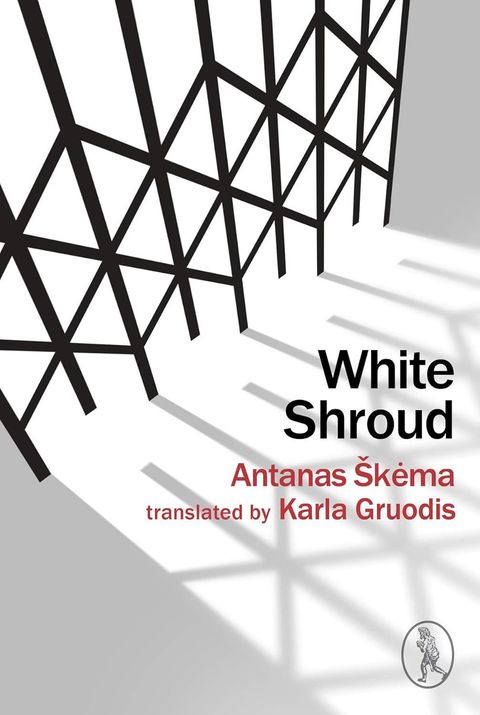
Drawing heavily on the author's own immigrant experience, this psychological, stream-of-consciousness work tells the story of an ‚migr‚ poet working as an elevator operator in a large New York hotel during the mid-1950s. The novel moves through sharply contrasting settings and stages in the narrator's life in Lithuania before and during World War II, returning always to New York and the recent immigrant's struggle to adapt to a completely different world. Strong characters and evocative utterances convey how historical context shapes language and consciousness, breaking down any stable sense of self. This translation will appeal to various audiences: readers of modernist and world literature, scholars of Baltic literature and refugee studies, and members of the Lithuanian diaspora unable to access this novel in Lithuanian. Written from the perspective of a newcomer to an Anglophone country, White Shroud encourages readers to better understand the complexities of immigrant life.
Story
About this book
White Shroud follows an emigre poet from Lithuania who works as an elevator operator in a New York hotel during the mid-1950s. The novel draws heavily on Antanas Skema's own experience as an immigrant, and it uses a stream-of-consciousness style to move between sharply different times and places. Scenes set in Lithuania before and during World War II alternate with the narrator's present life in New York, where he navigates the disorientation of starting over in a foreign country.
The structure reflects the narrator's fractured inner life. Memory, language, and identity shift as the story passes between wartime Europe and postwar Manhattan. Rather than following a single chronological line, the novel layers episodes so that past and present press against each other constantly. The effect is a portrait of someone whose sense of self has been reshaped by displacement and historical violence.
Skema wrote the novel in Lithuanian, and it is widely regarded as one of the central works of Lithuanian modernist fiction. This English translation opens the text to readers outside the Lithuanian-speaking world. Skema himself lived as an emigre in the United States, and the book's setting in a large hotel gives the narrator a confined, repetitive daily routine that contrasts with the turbulence of his memories.