Forest of the Gods
SynopsisPlot
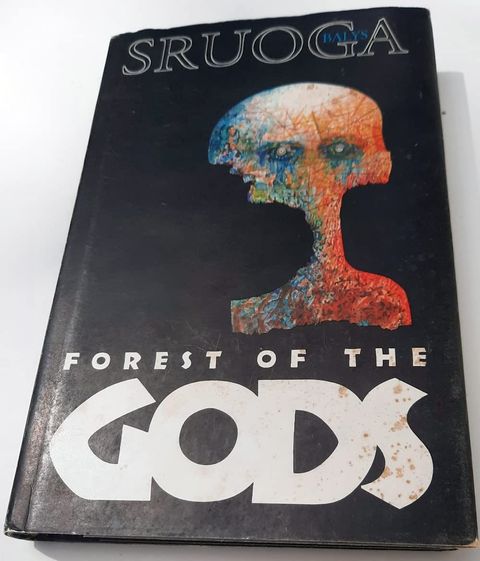
Sruoga's best-known work is the novel Forest of the Gods, based on his own life experiences as a prisoner in Stutthof concentration camp in Sztutowo, Free City of Danzig now present-day Nowy Dwór Gdański County, Pomeranian Voivodeship, Poland, where he was sent in March 1943 together with forty-seven other Lithuanian intellectuals after the Nazis started a campaign against possible anti-Nazi agitation in occupied Lithuania. In the book, Sruoga revealed life in a concentration camp through the eyes of a man whose only way to save his life and maintain his dignity was to view everything through a veil of irony and humor, where torturers and their victims are exposed as imperfect human beings, being far removed from the false ideals of their political leaders. For example, he wrote "A man is not a machine. He gets tired.", referring to the guards beating prisoners.
Story
About this book
Forest of the Gods is a novel by Lithuanian writer Balys Sruoga, drawn from his own imprisonment in the Stutthof concentration camp. In March 1943, Sruoga was arrested alongside forty-seven other Lithuanian intellectuals after Nazi authorities began targeting suspected anti-Nazi sentiment in occupied Lithuania. The camp was located in Sztutowo, then part of the Free City of Danzig and now within the Nowy Dwór Gdański County of Poland's Pomeranian Voivodeship.
Sruoga's account filters the daily reality of the camp through persistent irony and dry humor. Guards and prisoners alike appear as flawed, exhausted human beings rather than symbols of ideology. The narrative voice uses this distance as a means of psychological survival, observing cruelty with a tone that undercuts the authority of the captors without minimizing what is happening. The approach sets the book apart from many other accounts of camp life from the same period.
Soviet censors suppressed the manuscript after the war. It was not published until 1957, a full decade after Sruoga's death. The novel is widely regarded as his best-known work and holds a distinct place in Lithuanian literature.