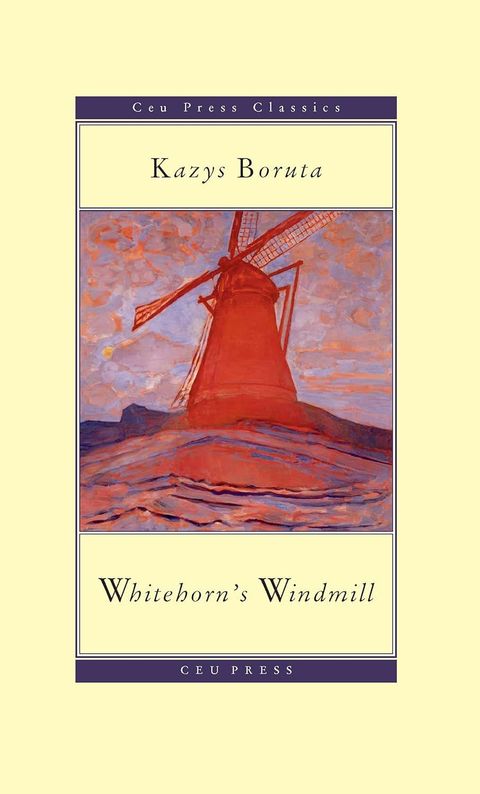
Whitehorn's Windmill
SynopsisPlot
Most of Whitehorn’s Windmill (Baltaragio malunas) was written in 1942, during the German occupation. Bearing a lyrical style that gives full rein to the oral folktale tradition Lithuania is famous for, the novel is by turns romantic, farcical, fantastic, and tragic. The sense of spirituality that permeates the work reflects Lithuania’s pagan roots that were overlaid with an occasionally over-zealous Catholicism not so very long ago. The story is about Whitehorn the miller’s efforts to find a match for his beautiful daughter, Jurga, against various calamities with and among suitors, neighbors, priests and other inhabitants of the village, and ultimately against the devil’s spell. The interesting plot made the novel popular as juvenile literature, too.
Story
About this book
Whitehorn's Windmill, known in Lithuanian as Baltaragio malunas, is a novel by Kazys Boruta written largely in 1942 during the German occupation of Lithuania. It tells the story of a miller called Whitehorn and his attempts to find a suitable husband for his daughter Jurga. The search draws in suitors, neighbors, priests, and other villagers, while a series of misfortunes and the interference of the devil complicate matters at every turn.
Boruta drew heavily on Lithuania's oral folktale tradition, giving the novel a lyrical, spoken quality that shifts between comedy, romance, fantasy, and darker episodes. The spiritual world of the story reflects a landscape where older pagan beliefs sit alongside a Catholicism that arrived comparatively recently and sometimes with excessive zeal. This layering of belief systems shapes the characters and the conflicts they face.
Boruta's own life was marked by political persecution. He spent years imprisoned both before and after the Second World War, and during the Soviet period in Lithuania he was forced to publish translations under a false name. The novel's accessible plot also made it popular among younger readers in Lithuania.