Bessarabian Stamps
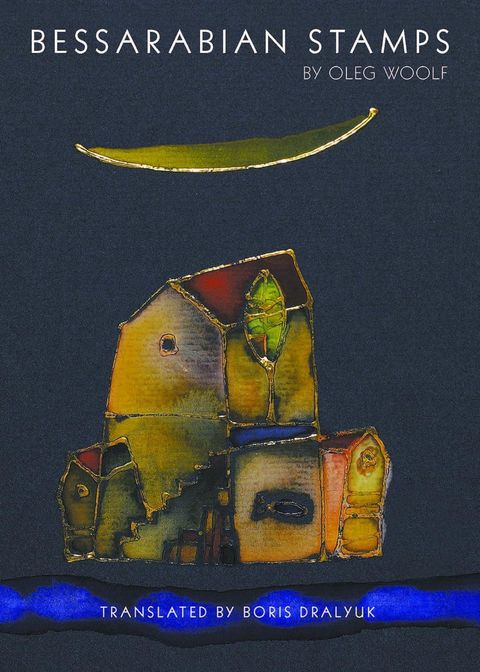
SynopsisPlot
Set mostly in the village of Sănduleni, Bessarabian Stamps is a vivid, surreal evocation of a liminal world. Sănduleni’s denizens are in permanent flux, forever shifting languages, cultures, and states, in every sense of the word. With a warm, Bessarabian irony recalling one of Eastern Europe’s long-forgotten regions, the Stamps explore what it means to live on the edges of empires, which rise and fall while Sănduleni abides.
Story
About this book
Bessarabian Stamps is a cycle of sixteen stories by Oleg Woolf, set largely in the village of Sănduleni. Bessarabia is a historical region between the Prut and Dniester rivers, now split between Moldova and Ukraine, that changed rulers repeatedly over centuries. The village sits in this contested territory, and its inhabitants live with the practical consequences of shifting borders: languages change, currencies change, the state itself changes, while ordinary life continues underneath.
Woolf's stories present Sănduleni as a place caught between solidity and dissolution. The people there adapt to each new political reality without fully belonging to any of them. The writing carries a surreal quality, bending the familiar details of village life into something stranger and harder to pin down. Comparisons have been drawn to Bruno Schulz, the Polish writer whose own fiction transformed a small Galician town into a site of constant metamorphosis. Both writers work at the scale of a single settlement to examine what happens when borders move but people stay.
The collection returns often to the experience of living at the margin of successive empires. Sănduleni endures while the powers that claim it do not, and Woolf treats this persistence with a dry, understated irony rooted in the region's own storytelling traditions.