Nostalgia
SynopsisPlot
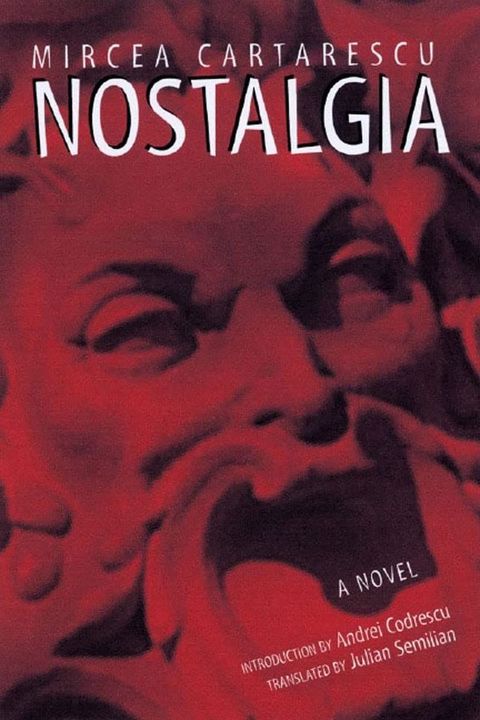
Mircea Cartarescu, born in 1956, is one of Romania's leading novelists and poets. This translation of his 1989 novel Nostalgia, writes Andrei Codrescu, "introduces to English a writer who has always had a place reserved for him in a constellation that includes the Brothers Grimm, Franz Kafka, Jorge Luis Borges, Bruno Schulz, Julio Cortazar, Gabriel Garcia Marquez, Milan Kundera, and Milorad Pavic, to mention just a few." Like most of his literary contemporaries of the avant-garde Eighties Generation, his major work has been translated into several European languages, with the notable exception, until now, of English.
Story
About this book
Nostalgia is a novel by Mircea Cartarescu, first published in Romania in 1989, the same year the country's communist regime collapsed. Cartarescu, born in Bucharest in 1956, belongs to the Romanian literary movement known as the Eighties Generation, a group of writers who pursued experimental and avant-garde fiction during a period of heavy state censorship. The book assembles several interconnected narratives that move between childhood memory, dream logic, and the physical spaces of Bucharest, blurring the line between what is recalled and what is imagined.
Cartarescu's prose draws on a tradition of literary fantasy and layered storytelling. The record of his influences and peers stretches across several languages and literary cultures, with critics noting affinities to writers such as Kafka, Borges, Bruno Schulz, and Julio Cortazar. Like much of his generation's work, Nostalgia was translated into a number of European languages before eventually reaching English-language readers.
The novel's structure gives each section its own atmosphere while linking them through recurring motifs and a shared sense of place. Bucharest appears throughout as both a concrete city and a space shaped by personal and collective memory.