The Rest Is Silence
SynopsisPlot
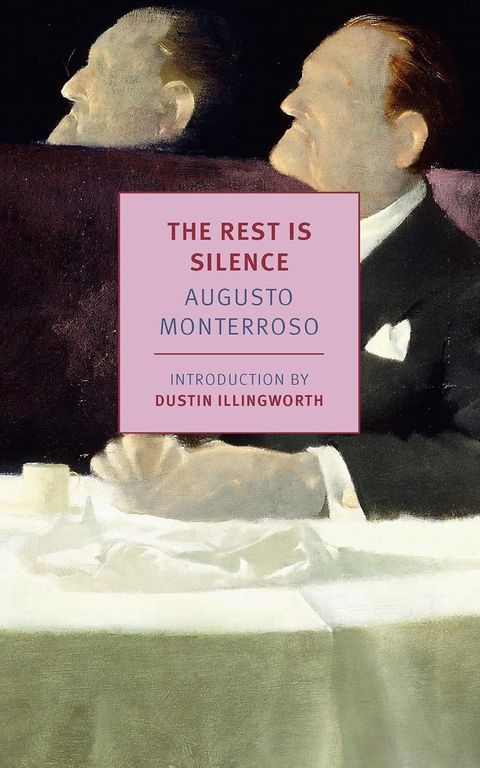
The one and only novel by the renowned Guatemalan writer Augusto Monterroso—Latin America’s most expansive miniaturist, whose tiny, acid, and bracingly surreal narratives Italo Calvino dubbed “the most beautiful stories in the world”—The Rest Is Silence presents the reader with the kaleidoscopic portrait of a provincial Mexican literary critic, one Eduardo Torres, a sort of Don Quixote of the Sunday supplements, whose colossal misreadings are matched only by the scale of his vanity.
Story
About this book
Augusto Monterroso, born in Honduras and raised in Guatemala, became one of Latin America's most distinctive prose writers by working almost exclusively in very short forms. His fiction tends toward the compressed and surreal, with a sharp comic edge. Italo Calvino praised his stories in striking terms. The Rest Is Silence is Monterroso's only novel, a departure in scale from the miniature narratives that defined most of his career.
The book assembles a fragmented portrait of Eduardo Torres, a provincial literary critic in Mexico who writes for Sunday newspaper supplements. Torres is presented as a figure of grand ambition and deep misunderstanding, someone whose readings of literature go spectacularly wrong while his self-regard remains entirely intact. The novel builds this portrait through multiple angles rather than a single linear plot, giving it a kaleidoscopic structure that fits a character who is, in effect, a small-town Don Quixote of letters.
Monterroso's comedy here operates through the gap between Torres's confidence and his actual grasp of the material he critiques. The setting in provincial Mexican literary culture provides a specific social world where minor authority and genuine absurdity can coexist comfortably.