The President
SynopsisPlot
Drawing from his experiences as a journalist writing under repressive conditions, Asturias employs such literary devices as satire to convey the government's transgressions and surrealistic dream sequences to demonstrate the police state's impact on the individual psyche. Asturias's stance against all forms of injustice in Guatemala caused critics to view the author as a compassionate spokesperson for the oppressed. "My work," Asturias promised when he accepted the Nobel Prize, "will continue to reflect the voice of the people, gathering their myths and popular beliefs and at the same time seeking to give birth to a universal consciousness of Latin American problems."
Story
About this book
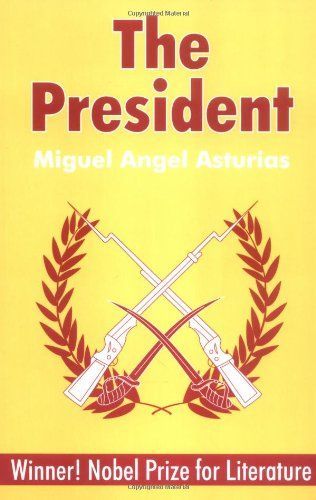
Miguel Angel Asturias began writing The President while he was still a law student in Guatemala, drawing on his firsthand observations as a journalist working under a repressive government. The novel centers on a nameless dictator whose regime saturates every layer of daily life, from the police apparatus down to the fears and dreams of ordinary citizens. Asturias based the figure loosely on Manuel Estrada Cabrera, who ruled Guatemala from 1898 to 1920, though the portrait extends beyond any single ruler to describe how authoritarian power reshapes an entire society.
The book moves between satirical passages and surrealistic dream sequences. Satire exposes the absurdities and cruelties of official conduct, while the dream episodes show how state violence penetrates the inner lives of individuals, distorting memory, loyalty, and trust. The effect is a narrative that shifts between sharp political observation and something closer to hallucination, reflecting the disorientation that unchecked authority can produce.
Asturias, who was born in Guatemala City in 1899, spent years in Paris during the 1920s and 1930s, where he studied Mayan mythology at the Sorbonne and revised the manuscript extensively. He was later awarded the Nobel Prize in Literature in 1967, with his fiction and poetry recognized for their roots in the traditions and outlook of Latin American peoples.