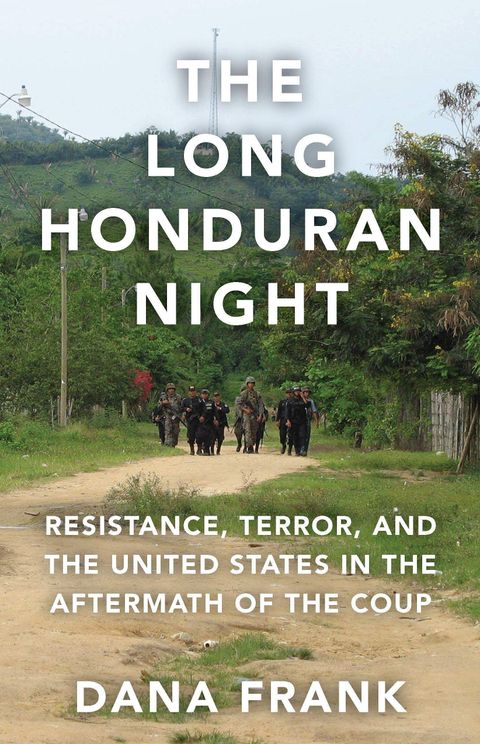
The Long Honduran Night
SynopsisPlot
Shortlisted for the 2019 Juan E. Méndez Book Award for Human Rights in Latin America, this powerful narrative recounts the dramatic years in Honduras following the June 2009 military coup that deposed President Manuel Zelaya, told in part through first-person experiences, layered into deeper political analysis. It weaves together two broad pictures: first, the repressive regime that was launched with the coup, and the ways in which U.S. policy has continued to support that regime; and second, the brave and evolving Honduran resistance movement, with aid from a new solidarity movement in the United States.
Story
About this book
In June 2009, a military coup removed President Manuel Zelaya from power in Honduras. Dana Frank's The Long Honduran Night follows what happened in the years after that event, combining first-person observations with broader political analysis. The book traces the consolidation of an authoritarian regime and examines how United States foreign policy continued to support it. Frank, a historian, builds her account from direct experience in the country alongside research into the structural forces shaping Honduran governance.
A second thread runs through the narrative: the growth of a Honduran resistance movement that emerged in response to state repression. Frank also documents a parallel solidarity movement that developed inside the United States, connecting activists across borders. Rather than presenting Honduras as a place defined only by violence and despair, the book treats the people organizing against repression as active political participants with strategies, setbacks, and goals of their own.
The book was shortlisted for the 2019 Juan E. Méndez Book Award for Human Rights in Latin America. Its structure moves between close ground-level reporting and wider policy discussion, linking events in Tegucigalpa and Washington through cause and consequence rather than treating them as separate stories.