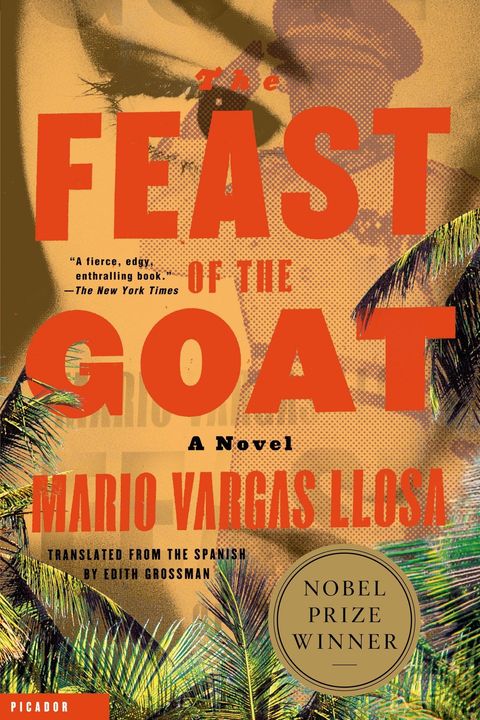
The Feast of the Goat
SynopsisPlot
Haunted all her life by feelings of terror and emptiness, forty-nine-year-old Urania Cabral returns to her native Dominican Republic - and finds herself reliving the events of l961 when the capital was still called Trujillo City and one old man terrorized a nation of three million. Rafael Trujillo, the depraved ailing dictator whom Dominicans call the Goat, controls his inner circle with a combination of violence and blackmail. In Trujillo's gaudy palace, treachery and cowardice have become a way of life. But Trujillo's grasp is slipping. There is a conspiracy against him, and a Machiavellian revolution already underway that will have bloody consequences of its own.
Story
About this book
Urania Cabral, a forty-nine-year-old woman living abroad, returns to the Dominican Republic after decades away. Her visit coincides with memories of 1961, when the capital still bore the name Trujillo City and the country of three million people lived under the control of Rafael Trujillo. The aging dictator, known to Dominicans as the Goat, maintained power through violence and blackmail, surrounding himself with a court shaped by treachery and fear. Urania's father was a senator within that regime, and her homecoming forces a confrontation with a personal and political past she has carried in silence.
Mario Vargas Llosa, the Peruvian novelist, structures the book across multiple timelines and perspectives. One thread follows Urania in the present as she visits her dying father. Another reconstructs the final days of Trujillo's rule, drawing on historical figures including Joaquin Balaguer, who would go on to hold the presidency for years after the dictatorship ended. A third follows the conspirators plotting against Trujillo. The novel examines how authoritarian power deforms private lives, how cruelty sustains a political system, and what remains when that system collapses.