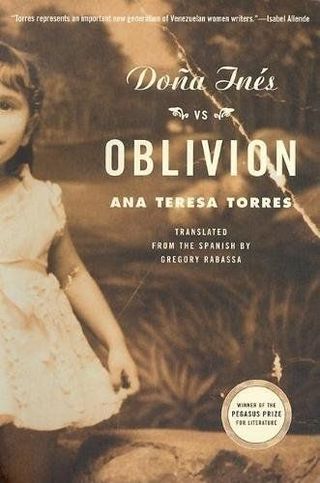
Doña Inés vs. Oblivion
SynopsisPlot
Dona Ines, matriarch of a wealthy family in eighteenth-century Caracas, is suing to regain the land her late husband bequeathed to his illegitimate mulatto son. Searching in vain for the original deed, she vows not to quit until the dust from the ancient documents rises up and chokes her. In 1780 she dies -- but the spirit of Dona Ines continues her quest through another two centuries of revolution, natural disaster, change, and social turmoil, riding the passionate tide of Venezuelan history to an ultimate conclusion. Beautiful, trenchant, and wickedly funny, it establishes Ana Teresa Torres as an important voice in world literature.
Story
About this book
In eighteenth-century Caracas, Dona Ines is the matriarch of a prosperous planter family locked in a legal battle over a coastal-province plantation. Her late husband left the land to his illegitimate son, born to an enslaved Black woman, and Dona Ines is determined to reclaim what she considers rightfully hers. She spends her remaining years searching for the original deed, vowing never to give up. When she dies in 1780, the dispute is still unresolved.
Her voice, however, does not stop. As a narrating spirit, Dona Ines continues to observe and comment across two centuries of Venezuelan history: revolutions, natural disasters, shifting racial and social boundaries, and the slow transformation of Caracas from a colonial village into a sprawling modern city. The property conflict persists through generations of her descendants, who gradually lose the resolve she once carried.
Ana Teresa Torres, a Venezuelan novelist, uses this single family grievance as a lens onto the country's larger changes. The story traces how class, race, and law intersect over time, while Dona Ines watches her world become something she can no longer recognize. The Washington Post Book World described the novel as an example of Latin American magical realism from a remarkable voice.