SynopsisPlot
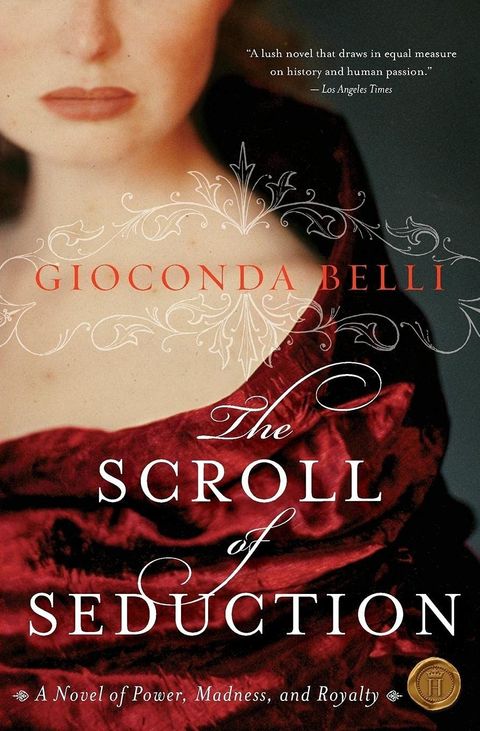
On an outing from her boarding school, young Lucía meets Manuel—art historian and exquisite storyteller—who shares with her the tale of one of history's most tumultuous loves: Queen Juana of Castile's legendary devotion to her husband, Prince Philippe the Handsome. Embracing a union thrust upon her by political necessity, Juana responds with all the passionate abandon inherent in her fiery nature—and is forced to pay a high price for her honest sensuality. For there are those at the Renaissance court who will not allow such unabashed independence in the heir to one of the world's most powerful empires—and they declare Juana mad, denying her ascension to the throne. But is she truly insane, or is she merely a victim of her own impetuosity and unbridled desire? Or is Juana a pawn in a fierce power struggle for control of the throne?
Story
About this book
The Scroll of Seduction by Nicaraguan author Gioconda Belli tells two intertwined stories separated by centuries. In the present-day frame, a young woman named Lucía meets Manuel, an art historian, during an outing from her boarding school. Manuel begins recounting the life of Queen Juana of Castile, drawing Lucía into a historical narrative that gradually reshapes her own understanding of desire, autonomy, and power.
Juana of Castile, sometimes called Juana la Loca, was the daughter of Ferdinand and Isabella and heir to one of the largest empires of the Renaissance era. Her marriage to Philippe the Handsome of Burgundy was arranged for political reasons, but Juana developed an intense attachment to her husband. The novel explores how her open displays of passion and independence were used against her by courtiers and family members who questioned her fitness to rule. Whether Juana was genuinely unstable or was deliberately sidelined by those seeking control of the throne remains a central tension throughout the book.
Belli sets the historical sections against the courts and political landscapes of late fifteenth- and early sixteenth-century Spain and the Low Countries. The parallel between Lucía's growing awareness and Juana's constrained life gives the novel its dual structure, connecting questions about women's agency across very different periods.