Open Veins of Latin America
SynopsisPlot
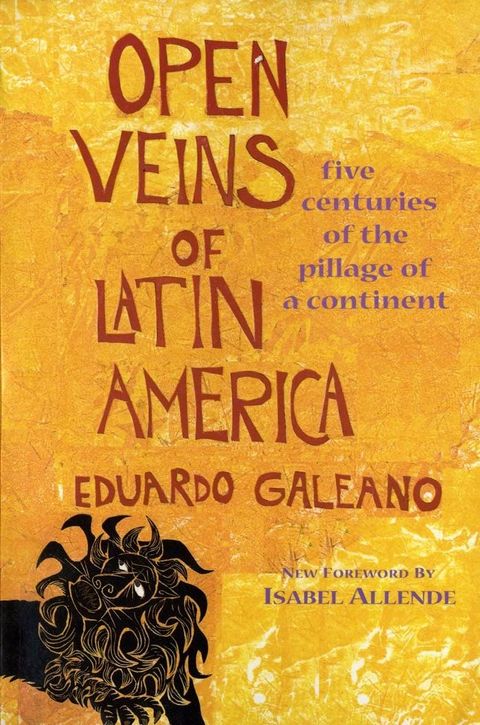
Rather than chronology, geography, or political successions, Eduardo Galeano has organized the various facets of Latin American history according to the patterns of five centuries of exploitation. Thus he is concerned with gold and silver, cacao and cotton, rubber and coffee, fruit, hides and wool, petroleum, iron, nickel, manganese, copper, aluminum ore, nitrates, and tin. These are the veins that he traces through the body of the entire continent, up to the Rio Grande and throughout the Caribbean, and all the way to their open ends where they empty into the coffers of wealth in the United States and Europe. Weaving fact and imagery into a rich tapestry, Galeano fuses scientific analysis with the passions of a plundered and suffering people. An immense gathering of materials is framed with a vigorous style that never falters in its command of themes. All readers interested in great historical, economic, political, and social writing will find a singular analytical achievement and an overwhelming narrative that makes history speak, unforgettably. This classic is now further honored by Isabel Allende’s inspiring introduction. Universally recognized as one of the most important writers of our time, Allende once again contributes her talents to literature, to political principles, and to enlightenment.
Story
About this book
Eduardo Galeano's Open Veins of Latin America organizes five centuries of the continent's history not by dates or governments but by commodities. Gold, silver, rubber, coffee, copper, tin, petroleum, and other raw materials each form a thread through the narrative. Galeano follows these resources from extraction sites across Latin America and the Caribbean to the markets and treasuries of the United States and Europe, tracing how wealth flowed outward while poverty settled in.
The book examines how foreign enterprises drew large profits from operations across the region, and how local elites often cooperated with outside powers rather than resisting them. Galeano argues that these relationships produced deeply unequal societies whose structures persisted across generations. His approach blends economic history with accounts of specific industries, crops, and minerals, connecting the fates of workers and landscapes to distant financial interests.
First published in 1971, the book was written in Uruguay and became widely read across Spanish-speaking countries. The edition referenced here, marking the book's twenty-fifth year in print, includes an introduction by Chilean-born novelist Isabel Allende. Galeano's organizational method, sorting history by exported resources rather than by era or nation, remains one of its most distinctive features.