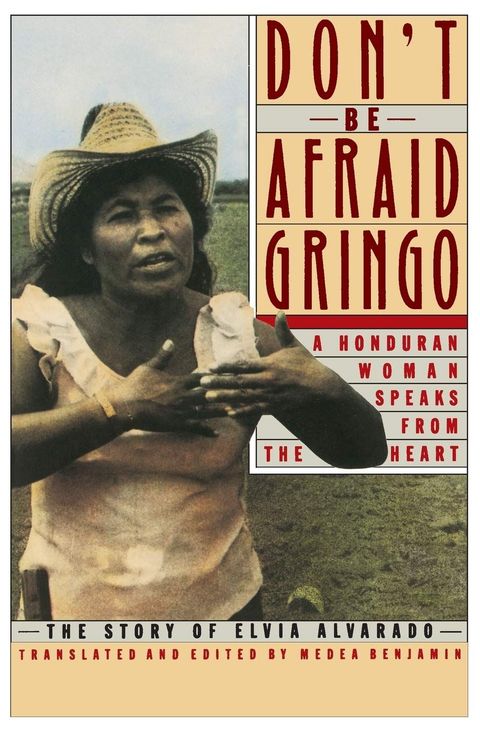
Don't Be Afraid, Gringo
SynopsisPlot
Don’t be Afraid, Gringo is the award-winning oral history of Elvia Alvarado, a courageous Campesina [peasant] activist in Honduras, the poorest country in Central America. Trained by the Catholic Church to organize women’s groups to combat malnutrition, Alvarado began to question why Campesinos were malnourished, to begin with. Her growing political awareness, her travels by foot, over the back roads of Honduras, and her conversations with people from all over the country have given her insights into the internal workings of her society that far surpass those of the majority of Campesinos who have never ventured from their villages. Working as a Campesino organizer, Alvarado has led dangerous land recovery actions in an effort to enforce the national land reform laws. As a result of these actions, she has been harassed, jailed, and tortured at the hands of the Honduran military.
Story
About this book
Don't Be Afraid, Gringo is an oral history told by Elvia Alvarado, a campesina (peasant) organizer in Honduras. Translated and edited by Medea Benjamin, the book follows Alvarado from her early work with Catholic Church-sponsored women's groups focused on combating malnutrition to her growing political consciousness. As she began asking why campesinos were malnourished in the first place, her focus shifted from relief work to the structural causes of rural poverty in what the record describes as the poorest country in Central America.
Alvarado's account covers her travels on foot across Honduras, through back roads and villages, talking with people whose experiences shaped her understanding of how land, power, and wealth were distributed. She became an organizer who led land recovery actions, efforts to enforce national land reform laws that existed on paper but were rarely applied. These actions brought direct consequences: harassment, imprisonment, and torture by the Honduran military.
The book's title refers to the term gringo, here used as a direct address to English-speaking readers. Benjamin's editing preserves Alvarado's voice while making her perspective accessible to an audience largely unfamiliar with daily life in rural Honduras. The record notes the book received award recognition.