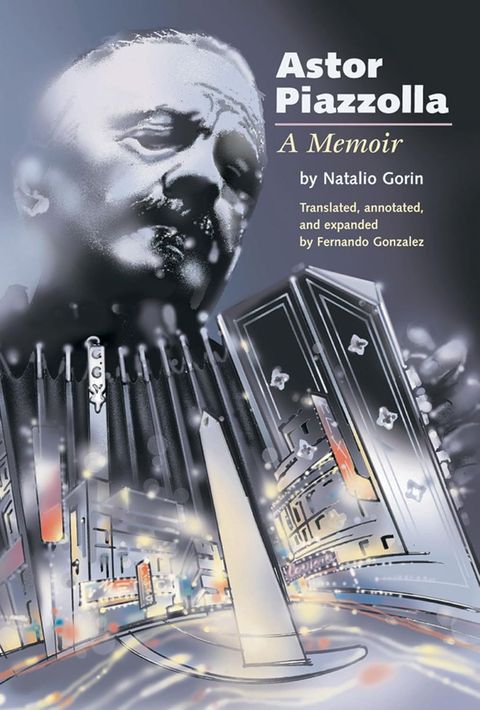
Astor Piazzolla: A Memoir
SynopsisPlot
The outspoken, headstrong Piazzolla told his story to journalist and longtime fan Natalio Gorin in the spring of 1990 in a series of frank interviews.Among the firsthand observations of others who knew Piazzolla well are those of his lyricist Horacio Ferrer, his fellow musicians, and his colleagues. Translator Fernando Gonzalez, an Argentine native and American popular music critic who covered Piazzolla's career in the United States, has annotated the Amadeus edition for the widening audience that is rediscovering Astor Piazzolla.
Story
About this book
Astor Piazzolla (1921-1992) spent decades reshaping tango from the inside, drawing on the harmonic language of composers like Ravel and Debussy alongside elements of cool jazz. Born in Mar del Plata, Argentina, and raised partly in New York City, he developed a style that treated tango as concert music rather than strictly dance music. His compositions introduced melodic and rhythmic layers that unsettled tango traditionalists while attracting listeners from classical and jazz circles. The tension between those audiences, and the resistance he faced at home, runs through much of his life story.
This memoir originated in a series of frank interviews Piazzolla gave to journalist Natalio Gorin in the spring of 1990. Piazzolla speaks directly about his career, his stubbornness, and the controversies that followed his work. The book also includes observations from people close to him, among them his lyricist Horacio Ferrer, fellow musicians, and jazz vibraphonist Gary Burton, whose recollections appear here for the first time.
The Amadeus edition was translated and annotated by Fernando Gonzalez, an Argentine-born American music critic who had covered Piazzolla's career in the United States. His notes provide context for readers encountering Piazzolla's musical world from outside Argentina.