The Tunnel
SynopsisPlot
Infamous for the murder of Maria Iribarne, the artist Juan Pablo Castel is now writing a detailed account of his relationship with the victim from his prison cell: obsessed from the first moment he saw her examining one of his paintings, Castel had become fixated on her over the next months and fantasized over how they might meet again. When he happened upon her one day, a relationship was formed that swiftly convinced him of their mutual love. But Castel's growing paranoia would lead him to destroy the one thing he truly cared about...
Story
About this book
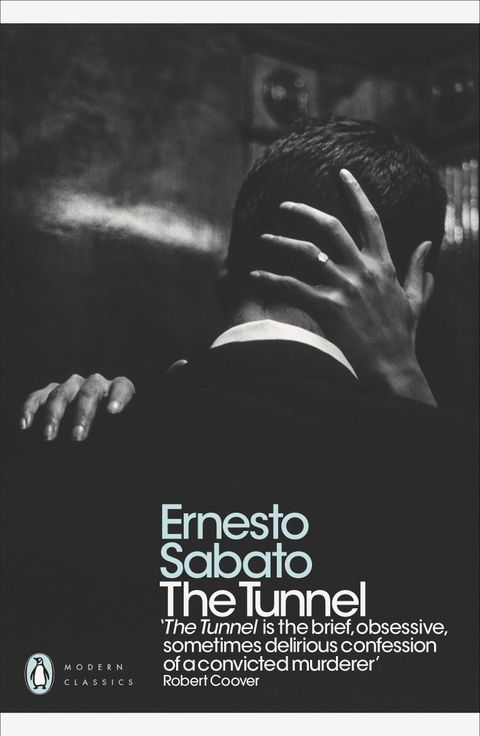
The Tunnel is a short novel by the Argentine writer Ernesto Sabato, first published in 1948. It takes the form of a confession written from a prison cell by Juan Pablo Castel, a painter who has killed a woman named Maria Iribarne. Castel does not hide this fact. He states it plainly at the start, then sets out to explain how and why it happened. The story moves backward through the months leading up to the crime, tracing Castel's account of his fixation on Maria after he noticed her studying a particular detail in one of his paintings at an exhibition.
Castel interprets Maria's attention to his work as proof of a deep, private connection between them. When they eventually meet, a relationship forms, but Castel's need for certainty and exclusivity begins to distort everything around him. Suspicion replaces affection. Small ambiguities in Maria's behavior become, for Castel, evidence of betrayal. The novel stays locked inside his perspective, offering no outside correction to his reasoning.
Sabato trained as a physicist before turning to literature, and Castel's narration has a cold, logical surface that contrasts with its increasingly unstable content. Albert Camus and Graham Greene both praised the book. It remains one of the best-known works of twentieth-century Argentine fiction.