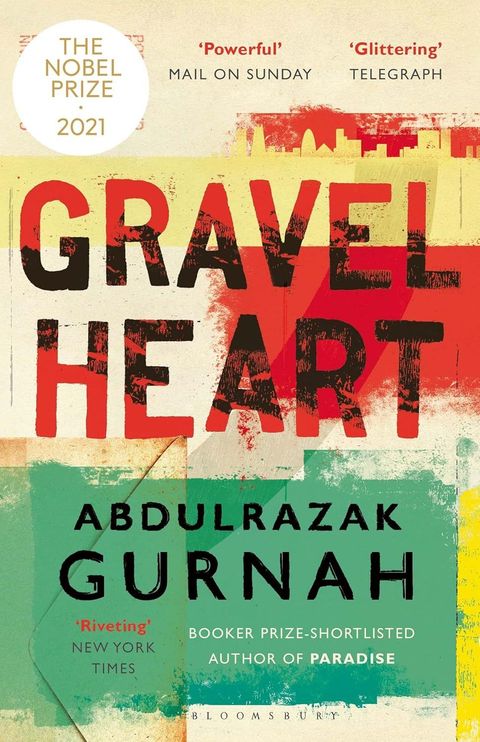
Gravel Heart
SynopsisPlot
Salim has always known that his father does not want him. Living with his parents and his adored Uncle Amir in a house full of secrets, he is a bookish child, a dreamer haunted by night terrors. It is the 1970s and Zanzibar is changing. Tourists arrive, the island's white sands obscuring the memory of recent conflict--the longed-for independence from British colonialism swiftly followed by bloody revolution. When his father moves out, retreating into disheveled introspection, Salim is confused and ashamed. His mother does not discuss the change, nor does she explain her absences with a strange man; silence is layered on silence.
Story
About this book
Gravel Heart follows Salim, a quiet, bookish boy growing up in 1970s Zanzibar in a household where much goes unspoken. He lives with his parents and his Uncle Amir, aware from an early age that his father seems to reject him. The island itself is in transition: British colonial rule has ended, revolution has reshaped the political order, and tourists are beginning to arrive on its beaches. At home, Salim watches his family fracture. His father leaves, withdrawing into solitude, while his mother offers no explanation for the upheaval or for her own unexplained absences.
When Uncle Amir, now holding a diplomatic position, arranges for Salim to study in London, the teenager seizes the chance. London proves difficult in its own way. The cold climate, the crowds, and the isolation of immigrant life press on him as he tries to establish himself far from everything familiar. At the same time, questions about his family's buried history follow him across the distance.
Abdulrazak Gurnah, who was awarded the 2021 Nobel Prize in Literature, sets the novel at the intersection of personal secrecy and political change. Salim's search for clarity about his parents and uncle runs alongside a wider portrait of Zanzibar's post-revolution society and the particular loneliness of displacement.