Celestial Bodies
SynopsisPlot
In the village of al-Awafi in Oman, we encounter three sisters: Mayya, who marries after a heartbreak; Asma, who marries from a sense of duty; and Khawla, who chooses to refuse all offers and awaits a reunion with the man she loves, who has emigrated to Canada. These three women and their families, their losses, and their love unspool beautifully against a backdrop of a rapidly changing Oman, a country evolving from a traditional, slave-owning society into its complex present. Through the sisters, we glimpse a society in all its degrees, from the very poorest of the local slave families to those making money through the advent of new wealth.
Story
About this book
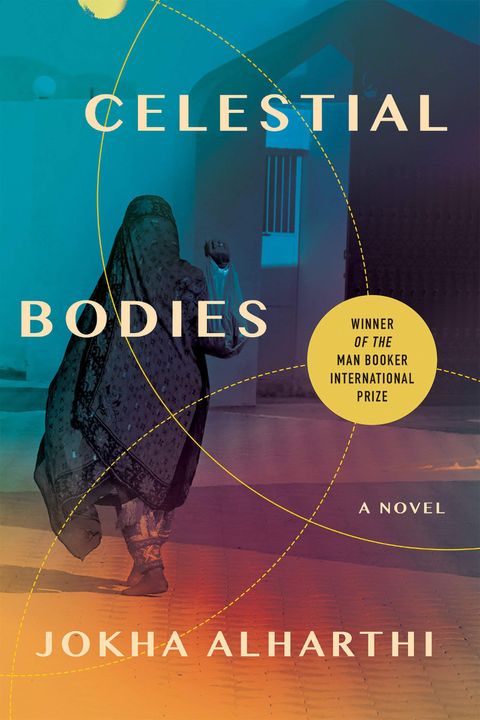
Celestial Bodies follows three sisters in the Omani village of al-Awafi, each navigating marriage and desire along different paths. Mayya enters marriage after recovering from earlier heartbreak. Asma agrees to marry out of obligation. Khawla turns down every suitor, holding out for the man she loves, who has left for Canada. Their choices unfold across several decades as Oman itself undergoes deep structural change.
The novel maps the social layers of a country moving from older hierarchies, including the legacy of slavery, toward the pressures and possibilities of new wealth. Families at every economic level appear in the story, and the domestic details of al-Awafi become a way of tracing larger shifts in Omani life. Alharthi writes from within these households rather than from a historical distance, so the political and economic transformations register through personal relationships, silences, and daily decisions.
Jokha Alharthi is a writer from Oman, and Celestial Bodies was the first novel originally written in Arabic to win the Man Booker International Prize. It was also the first book by an Omani woman author to appear in English translation.