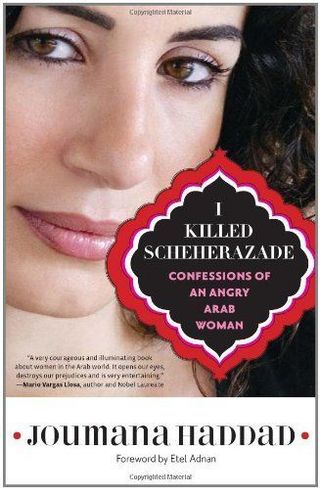
I Killed Scheherazade
SynopsisPlot
Joumana Haddad is angry. She finds the West’s portrayal of Arab women appalling and the image projected by many Middle Eastern women infuriating. “Being an Arab today means you need to be a hypocrite,” Haddad boldly states. “We constantly and obsessively think about sex but dare not talk about it.” In I Killed Scheherazade, Haddad challenges prevalent notions of Arab womanhood and, in the process, shatters the centuries-old stereotype of Scheherazade, the virgin heroine of The Arabian Nights who won the king’s affection. Fiery and candid, this provocative exploration of what it means to be an Arab woman today will enlighten and inform new international feminism.
Story
About this book
Joumana Haddad is a Lebanese poet and journalist. In this book, she confronts what she sees as two distortions of Arab womanhood: one produced by Western assumptions, and another maintained within parts of the Arab world itself. The title refers to Scheherazade, the fictional narrator of The Arabian Nights who survived by telling stories to a king. Haddad treats this figure as a symbol she wants to dismantle, arguing that Arab women should not need to perform or persuade to earn safety or approval.
The book is part memoir, part cultural essay. Haddad draws on her own experiences growing up in Lebanon to examine how silence around sexuality, desire, and personal autonomy shapes everyday life for women in the region. She is direct about the gap between private thought and public conduct, describing a culture where certain subjects are constantly present yet rarely spoken about openly. Her criticism extends in both directions, questioning Western observers who flatten Arab women into a single oppressed category, and social pressures within Arab societies that discourage honest self-expression.
Haddad writes from Beirut, a city long positioned between European and Arab cultural influences. Her arguments stay rooted in specifics rather than abstraction, and the book addresses feminism, censorship, and identity without settling for tidy conclusions about any of them.