2666
SynopsisPlot
Its throng of unforgettable characters includes academics and convicts, an American sportswriter, an elusive German novelist, and a teenage student and her widowed, mentally unstable father. Their lives intersect in the urban sprawl of Santa Teresa―a fictional Juárez―on the U.S.-Mexico border, where hundreds of young factory workers, in the novel as in life, have disappeared.
Story
About this book
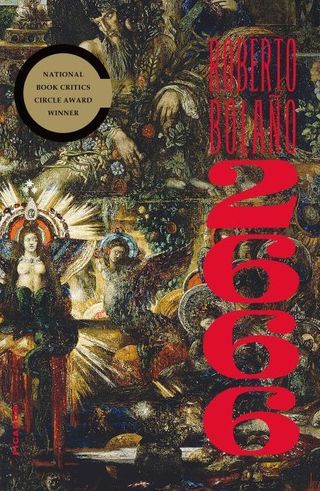
2666 is a posthumous novel by the Chilean writer Roberto Bolaño, published in 2004. It consists of five interconnected parts that Bolaño originally intended to release as separate books, partly to provide financial security for his children. After his death in 2003, his heirs chose instead to publish the work as a single novel. The structure moves between continents and perspectives, following a wide cast that includes four European literature professors, an American sportswriter, a reclusive German novelist named Benno von Archimboldi, a teenage student, and her widowed father.
The four professors are bound together by their shared obsession with Archimboldi, whose growing reputation has made him a subject of international scholarly attention. Their intellectual camaraderie develops complicated personal dimensions, and a rumored sighting of the novelist draws them to Santa Teresa, a fictional city modeled on Ciudad Juárez, on the border between Mexico and the United States.
Santa Teresa anchors the novel's darkest thread. In the city's industrial sprawl, hundreds of young women working in factories have gone missing, a pattern drawn from real events in Juárez during the 1990s and 2000s. The lives of the novel's scattered characters converge around this place and its unanswered violence.