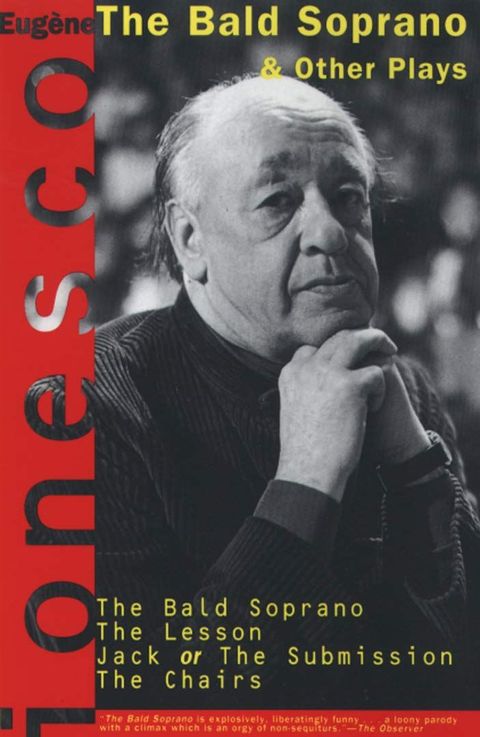
The Bald Soprano and Other Plays
SynopsisPlot
Ionesco went on to become an internationally renowned master of modern drama, famous for the comic proportions and bizarre effects that allow his work to be simultaneously hilarious, tragic, and profound. As Ionesco has said, “Theater is not literature. . . . It is simply what cannot be expressed by any other means.”
Story
About this book
Eugène Ionesco, born in Romania and later based in France, became one of the central figures of absurdist theater during the mid-twentieth century. The Bald Soprano, his first play, premiered in Paris in 1950 and opens with a conventional English couple, Mr. and Mrs. Smith, exchanging oddly hollow pleasantries in their London sitting room. As the dialogue continues, language itself begins to break down. Polite conversation loops, contradicts itself, and dissolves into nonsense syllables, exposing the gap between the sounds people make and what those sounds actually communicate.
This collection pairs The Bald Soprano with several other short plays by Ionesco. Across these works, everyday domestic situations tip into the strange and the mechanical. Characters forget who they are, objects multiply without explanation, and logic offers no reliable foothold. The comedy in these pieces comes not from jokes in the usual sense but from the growing distance between what the characters expect from language and what language delivers.
Ionesco once stated that theater is not literature and exists as something that cannot be expressed by any other means. His plays test that idea by stripping spoken language of its ordinary function and watching what remains on stage.