One, None and a Hundred Thousand
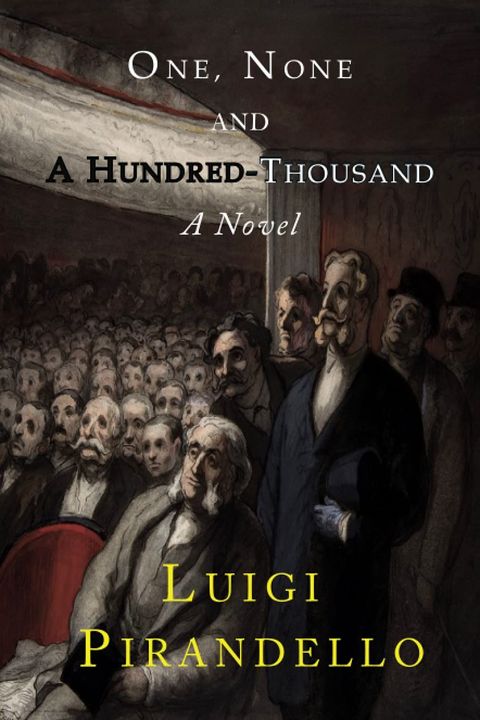
SynopsisPlot
Vitangelo, the protagonist, discovers by way of a completely irrelevant question that his wife poses to him that everyone he knows, and everyone he has ever met, has constructed a Vitangelo persona in their own imagination and that none of these personas corresponds to the image of Vitangelo that he himself has constructed and believes himself to be. The reader is immediately immersed in a cruel game of confusing projections, mirroring the reality of social existence itself, which imperiously dictate their rules. As a result, the first, ironic "awareness" of Vitangelo consists in the knowledge of that which he definitely is not; the preliminary operation must therefore consist in the spiteful destruction of all of these fictitious masks.
Story
About this book
Luigi Pirandello's novel One, None and a Hundred Thousand follows Vitangelo Moscarda, a man whose sense of identity collapses after his wife makes an offhand remark about his appearance. From this small, almost trivial moment, Vitangelo realizes that every person he has ever known carries a different version of him in their mind, and that none of these versions matches the person he believes himself to be. The discovery is both absurd and destabilizing.
Vitangelo's response is not passive acceptance. He sets out to dismantle every false image others have built of him, a campaign that those around him interpret as erratic or hostile. The novel traces this effort and its consequences as Vitangelo tries to locate something authentic beneath the accumulated projections of social life. Pirandello, in a 1924 letter, described the book as the bitterest of all his works, calling it profoundly humoristic and concerned with the decomposition of life.
The story is set in an Italian town where reputation and social role define a person's standing. Vitangelo's position as the son of a banker gives him visibility, which makes his rebellion against fixed identity all the more disruptive to the people around him. The tension between individual self-perception and the images imposed by others runs through every stage of the plot.