A Life Full of Holes
SynopsisPlot
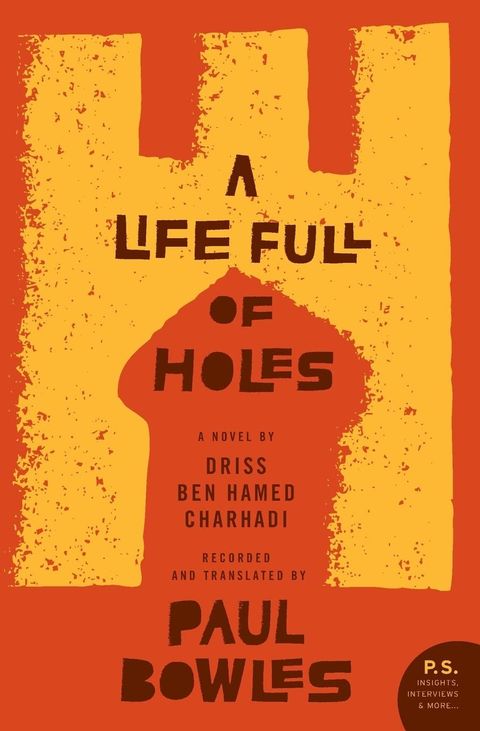
A Life Full of Holes is the result of a singular collaboration between two remarkable individuals: Driss ben Hamed Charhadi, an illiterate North African servant and street vendor, and American novelist and essayist Paul Bowles. The powerful story of a shepherd and petty trafficker struggling to maintain hope as he wrestles with the grim realities of daily life, it is the first novel ever written in the Arabic dialect Moghrebi, faithfully recorded and translated into English by Bowles. Straightforward yet rich in complex emotions, it is a fascinating inside look at an unfamiliar culture—harsh and startling, yet interwoven with a poignant, poetic beauty.
Story
About this book
A Life Full of Holes emerged from an unusual partnership between Driss ben Hamed Charhadi, an illiterate Moroccan who worked as a servant and street vendor, and the American writer Paul Bowles, who had settled in Tangier. Charhadi narrated his story aloud in Moghrebi, the spoken Arabic dialect of Morocco, and Bowles transcribed and translated the account into English. The result is described as the first novel composed in Moghrebi, a dialect that was rarely written down at the time.
The narrative follows a shepherd and small-scale trafficker trying to survive in a world that offers little security. Daily struggles with poverty, labor, and social hierarchies shape his path through a society where stability is always fragile. The voice throughout is direct and unadorned, carrying the rhythms of spoken language rather than literary convention.
Bowles, who lived in Morocco for decades, served as both translator and recorder rather than co-author in the traditional sense. The collaboration raises questions about how oral storytelling crosses into printed literature, and about who controls the shape of a story when narrator and translator come from such different positions. The book sits at the intersection of autobiography, fiction, and ethnographic document.