Salvation Army
SynopsisPlot
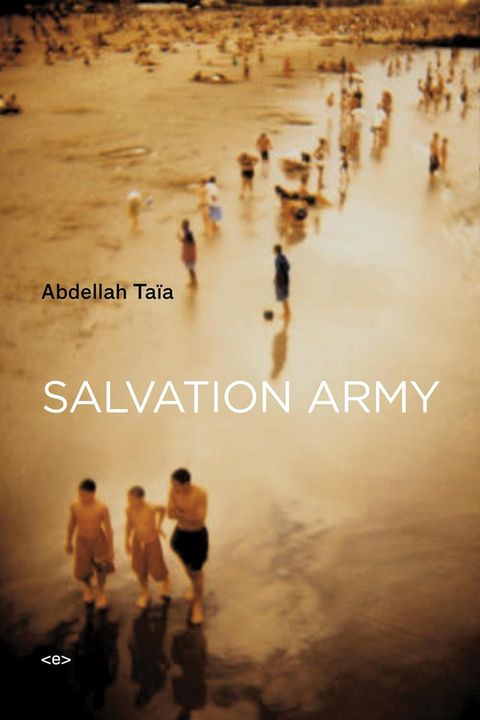
An autobiographical novel by turn naïve and cunning, funny and moving, this most recent work by Moroccan expatriate Abdellah Taïa is a major addition to the new French literature emerging from the North African Arabic diaspora. Salvation Army is a coming-of-age novel that tells the story of Taïa's life with complete disclosure—from a childhood bound by family order and latent (homo)sexual tensions in the poor city of Salé, through an adolescence in Tangier charged by the young writer's attraction to his eldest brother, to a disappointing arrival in the Western world to study in Geneva in adulthood. In so doing, Salvation Army manages to burn through the author's first-person singularity to embody the complex mélange of fear and desire projected by Arabs on Western culture. Recently hailed by his native country's press as “the first Moroccan to have the courage to publicly assert his difference,” Taïa, through his calmly transgressive work, has “outed” himself as “the only gay man” in a country whose theocratic law still declares homosexuality a crime.
Story
About this book
Salvation Army is an autobiographical novel by Abdellah Taïa, a Moroccan writer who grew up in the city of Salé and later moved to Europe. The book follows Taïa's life in short, direct chapters, beginning with his childhood in a large family living in poverty. Early sections describe the household's internal dynamics, including unspoken tensions around sexuality in a society where homosexuality remains illegal under law. The narrative carries a tone that shifts between frank simplicity and quiet observation.
As the story moves forward, the setting changes from Salé to Tangier and eventually to Geneva, where Taïa arrives as a young man to study. Each location marks a different stage of self-awareness. In Morocco, desire and family loyalty exist in uneasy proximity. In Switzerland, the expected freedoms of the West prove less straightforward than imagined. Taïa does not present Europe as a simple escape or resolution.
The novel belongs to a current of French-language literature written by authors from North Africa and its diaspora. Taïa has been recognized in Moroccan press as one of the few public figures from the country to openly identify as gay, a fact that gives the book's plain-spoken honesty a specific social context.