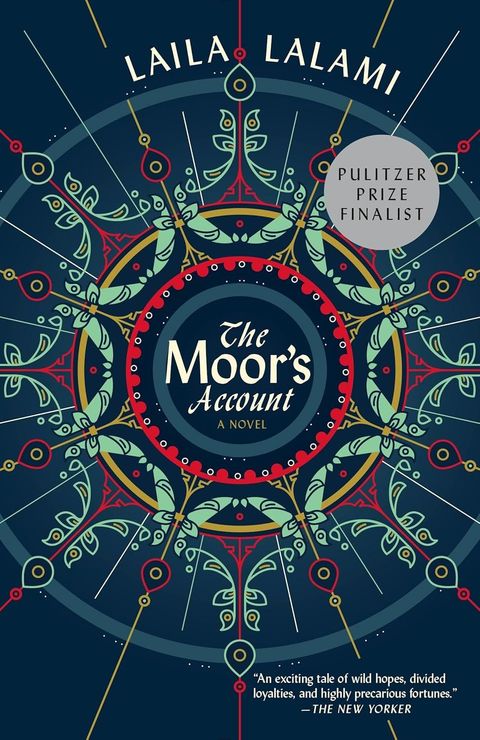
The Moor's Account
SynopsisPlot
In these pages, Laila Lalami brings us the invented memoirs Mustafa al-Zamori, called Estebanico. The slave of a Spanish conquistador, Estebanico sails for the Americas with his master, Dorantes, as part of a danger-laden expedition to Florida. Within a year, Estebanico is one of only four crew members to survive. As he journeys across America with his Spanish companions, the Old World roles of slave and master fall away, and Estebanico remakes himself as an equal, a healer, and a remarkable storyteller. His tale illuminates the ways in which our narratives can transmigrate into history—and how storytelling can offer a chance at redemption and survival.
Story
About this book
Laila Lalami's novel reimagines the life of Mustafa al-Zamori, a Moroccan man from Azemmour who was sold into slavery and renamed Estebanico. He crosses the Atlantic as the property of the Spanish conquistador Andrés Dorantes, joining an expedition to Florida in 1527. The venture, led by Pánfilo de Narváez, collapsed. Of the hundreds of men who landed on the Gulf Coast, four survived, and Estebanico was one of them.
Written as a fictional first-person memoir, the book gives Estebanico a voice that the historical record never preserved. As the four survivors travel for years across the continent, the fixed roles of master and slave become harder to hold in place. Estebanico works as translator, healer, and storyteller, shaping how the group is received by the Indigenous peoples they meet. The novel follows how personal narratives pass into history, and who gets left out of them.
Lalami was born in Morocco and later moved to the United States. The surviving Spanish accounts of the expedition record Estebanico only in passing, and this novel works inside that gap, filling it with one man's version of the same events. The book was named a Pulitzer Prize finalist and a New York Times Notable Book.