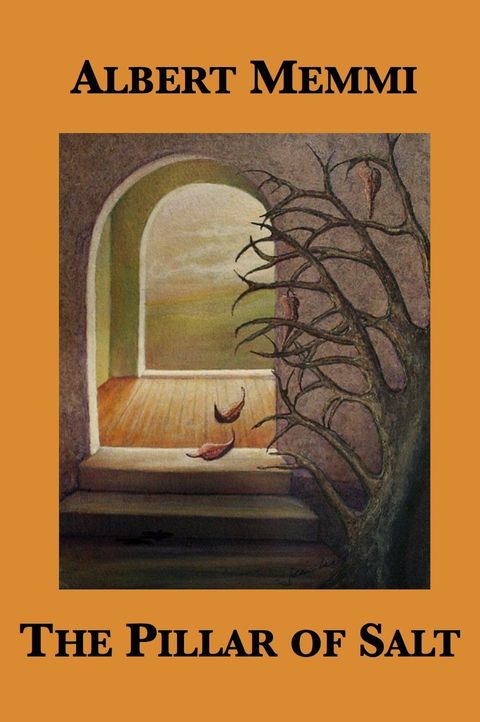
The Pillar of Salt
SynopsisPlot
This autobiographical novel follows Alexandre Benillouche, a young Jewish man growing up in colonial Tunisia, as he struggles with questions of identity, belonging, and freedom. Caught between his Jewish heritage, Arab culture, and French colonial influence, Alexandre feels alienated from all three worlds. As he moves from childhood into adulthood, he confronts discrimination, poverty, and the disintegration of his community, ultimately leaving Tunisia to seek liberation and self-definition in France — but discovers that exile carries its own form of solitude and loss.
Story
About this book
The Pillar of Salt follows Alexandre Benillouche, a young Jewish man in colonial Tunisia, through his childhood and into early adulthood. Originally published in 1955, Albert Memmi's semi-autobiographical novel traces Alexandre's life in a society divided along lines of religion, language, and colonial authority. He grows up in a poor Jewish quarter, caught between an Arabic-speaking family, a French-language education system, and a colonial administration that treats local populations as secondary. Each sphere offers partial belonging but never full acceptance.
As Alexandre advances through school and begins to define himself intellectually, he encounters discrimination from multiple directions. His academic success opens doors but also widens the distance between him and his community. The tensions are not abstract: they appear in classroom encounters, family meals, neighborhood relationships, and the everyday friction of navigating languages and expectations that do not align. Eventually he leaves Tunisia for France, where the promise of a freer life meets a different kind of isolation.
Memmi, who was born in Tunis in 1920 and later settled in Paris, drew heavily on his own experience for the novel. The book sits alongside his later nonfiction work on colonialism and identity, grounding those broader arguments in the texture of one specific life.