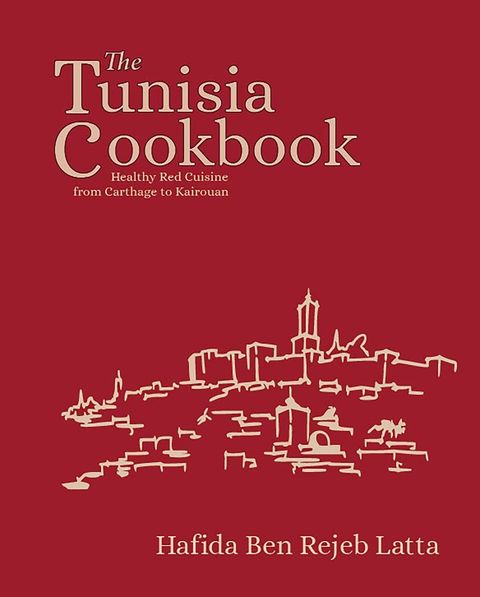
The Tunisia Cookbook: Healthy Red Cuisine from Carthage to Kairouan
SynopsisPlot
The culinary traditions we celebrate in Tunisia today are the flowering of a mature culture that has flourished and deepened over centuries. It explores the many levels at which diet contributes to the community. The Olive tree, which lies at the heart of Mediterranean cooking, is used comprehensively – its roots, trunk, branches, twigs, leaves and fruit are all used for the benefit of healthy living. The wood is turned into craft items and the foliage is often used for medicinal purposes, while the fruit appears as appetizers or in the form of oil for cooking and cosmetics. Without roots and trunks a tree cannot grow leaves and without supportive dietary roots societies, too, can wither in the same way. Includes dual measures.
Story
About this book
The Tunisia Cookbook by Haffida Ben Rejeb Latta presents traditional dishes from across Tunisia, tracing culinary roots that stretch back through centuries of layered cultural history. The book covers a broad range of recipes organized around what the author calls healthy red cuisine, connecting the food of modern Tunisia to traditions shaped by influences from Carthage to the inland city of Kairouan. Recipes are accompanied by dual measures, making the book accessible to cooks working in both metric and imperial systems.
A central thread running through the book is the olive tree and its place in Mediterranean cooking. Latta describes how nearly every part of the tree finds a use in Tunisian life: the fruit appears as appetizers or is pressed into oil for cooking and cosmetics, the wood is shaped into craft objects, and the foliage serves medicinal purposes. The olive tree becomes a way of explaining how deeply food production, health, and daily culture are connected in Tunisian society.
Beyond individual recipes, the book examines how diet supports community life at several levels. Latta treats Tunisian food not only as a collection of ingredients and techniques but as an expression of social continuity, linking the health of a food culture to the long-term well-being of the people who sustain it.