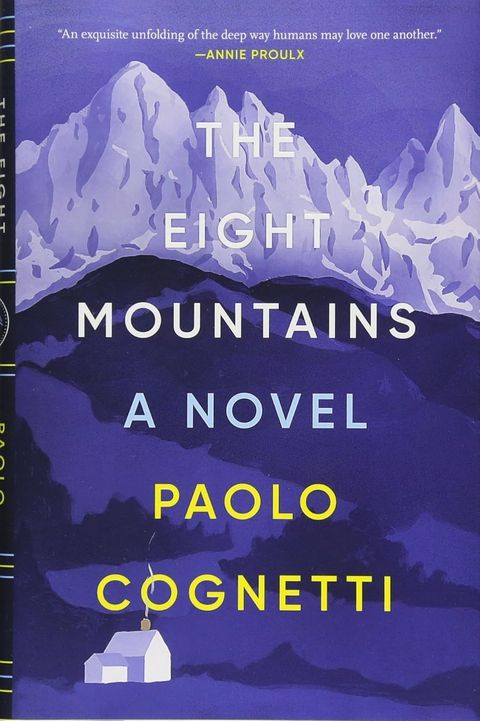
The Eight Mountains
SynopsisPlot
Pietro is a lonely boy living in Milan. With his parents becoming more distant each day, the only thing the family shares is their love for the mountains that surround Italy. While on vacation at the foot of the Aosta Valley, Pietro meets Bruno, an adventurous, spirited local boy. Together they spend many summers exploring the mountains’ meadows and peaks and discover the similarities and differences in their lives, their backgrounds, and their futures. The two boys come to find the true meaning of friendship and camaraderie, even as their divergent paths in life—Bruno’s in the mountains, Pietro’s across the world—test the strength and meaning of their connection.
Story
About this book
Pietro grows up in Milan, where his family life is quiet and strained. His parents grow more distant from each other over time, but the one thing that still holds them together is a shared attachment to the mountains of northeastern Italy. During summers spent at the foot of the Aosta Valley, Pietro meets Bruno, a local boy whose life is rooted in the alpine landscape. The two form a close friendship built on long days spent walking through meadows and climbing peaks together.
As they grow older, their paths split. Pietro moves through cities around the world, while Bruno stays in the mountains. The novel follows the shape of their friendship across years, tracking how distance and different choices test a bond formed in childhood. Alongside this central relationship, the book explores the complicated pull between fathers and sons, and the way a particular place can anchor a person's sense of identity even when they leave it behind.
Paolo Cognetti sets the story against the physical reality of the Italian Alps, where altitude, seasons, and terrain are constant presences rather than background scenery. The title refers to a Nepali model of the universe, connecting the local mountain setting to a broader idea of how landscapes shape the people who live among them.