The Tragedy of Man
SynopsisPlot
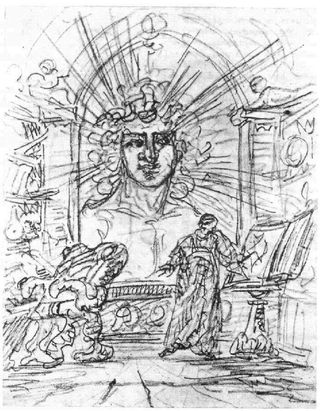
The Tragedy of Man (Hungarian: Az ember tragédiája) is a play written by the Hungarian author Imre Madách. It was first published in 1861. Many lines have become common quotations in Hungary. The 1984 film The Annunciation (Angyali üdvözlet) was based on the play, as was the 2011 animated film The Tragedy of Man.
Story
About this book
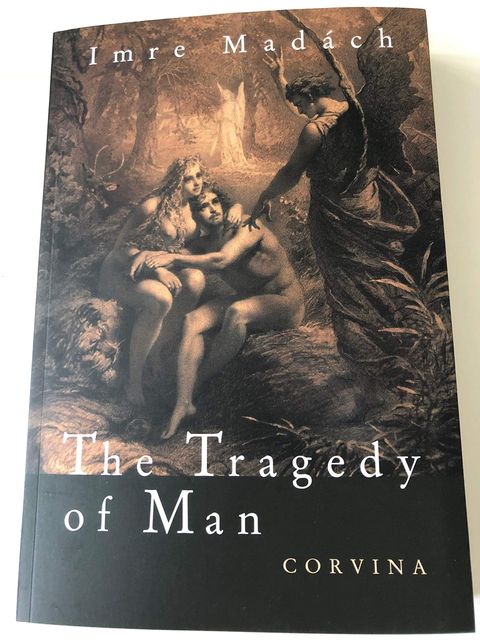
The Tragedy of Man is a dramatic work by Hungarian author Imre Madách, first published in 1861. Written in fifteen scenes, the play follows three recurring figures, Adam, Eve, and Lucifer, through a sweeping arc that begins with creation and ends in a distant frozen future. Between those poles, the characters reappear across ten historical periods, each time wearing different identities. Adam appears as a Pharaoh in ancient Egypt, as the Athenian general Miltiades, as the astronomer Johannes Kepler in Prague, and as Georges Danton during the French Revolution, among other roles. Eve and Lucifer shift alongside him, sometimes as allies, sometimes as adversaries.
The settings move from Eden to Egypt, Athens, Rome, Constantinople during the First Crusade, and onward through London in the nineteenth century and into imagined futures. One scene places Adam and Lucifer inside a rigid collectivist society where they pose as traveling chemists. Another sends them into space. The final historical scene depicts an ice age thousands of years ahead, before the play circles back to its starting point outside Eden.
Many lines from the work have entered everyday speech in Hungary, and it remains one of the most frequently staged Hungarian plays. A 1984 live-action film and a 2011 animated adaptation have both drawn on its structure and themes.