Waiting for Godot
SynopsisPlot
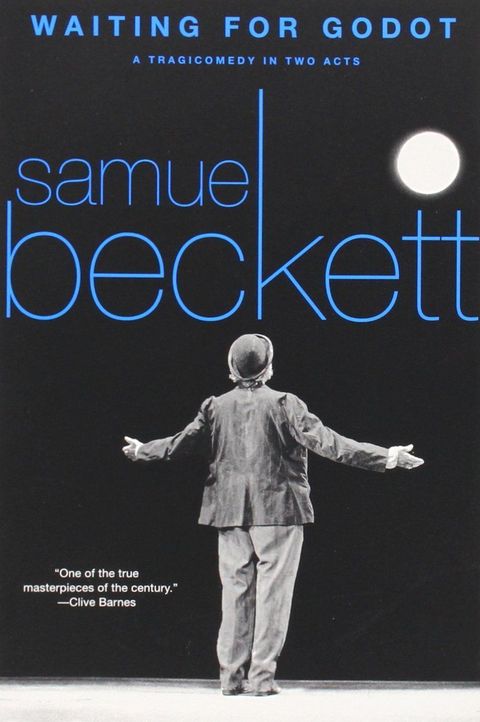
The story revolves around two seemingly homeless men waiting for someone—or something—named Godot. Vladimir and Estragon wait near a tree, inhabiting a drama spun of their own consciousness. The result is a comical wordplay of poetry, dreamscapes, and nonsense, which has been interpreted as mankind’s inexhaustible search for meaning. Beckett’s language pioneered an expressionistic minimalism that captured the existential post-World War II Europe. His play remains one of the most magical and beautiful allegories of our time.
Story
About this book
Vladimir and Estragon stand by a bare tree on an empty road, waiting for a figure named Godot. They are not sure when Godot will arrive, or even what he looks like. While they wait, they talk, argue, play word games, swap hats, and consider leaving, though they never do. Two other characters, Pozzo and Lucky, pass through and briefly interrupt the routine. A boy arrives with a message that Godot will not come today but surely will tomorrow. The cycle repeats.
Samuel Beckett wrote the play originally in French, completing it in 1949, and later translated it into English himself. It was first performed in Paris in January 1953. The text strips theatrical convention down to a minimum: there is almost no plot, no detailed set, and little physical action. What remains is language, silence, and repetition. Beckett classified it as a tragicomedy, and the two central figures shift between clowning and despair in short, looping exchanges.
The play has been widely linked to existentialist thought and to the mood of post-World War II Europe, though Beckett himself resisted fixed interpretations. Its sparse structure leaves open the question of who or what Godot represents, and the text provides no answer.