Master and Margarita
SynopsisPlot
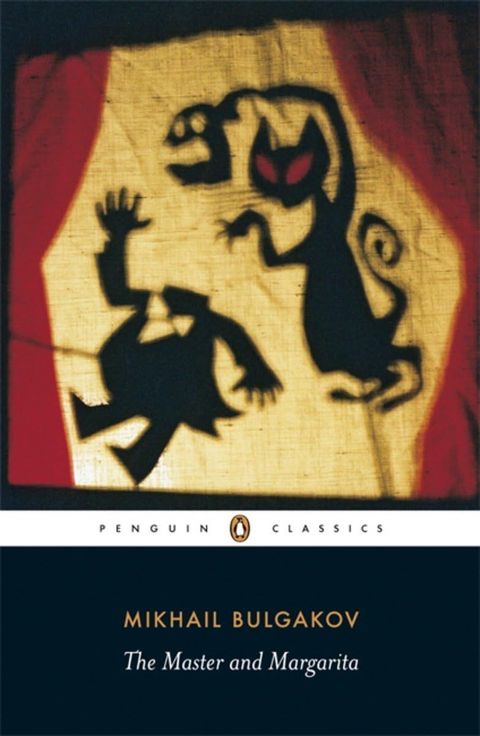
In Soviet Moscow, God is dead, but the devil - to say nothing of his retinue of demons, from a loudmouthed, gun-toting tomcat, to the fanged fallen angel Koroviev - is very much alive. As death and destruction spread through the city like wildfire, condemning Moscow's cultural elite to prison cells and body bags, only a madman, the Master, and Margarita, his beautiful, courageous lover, can hope to end the chaos. Written in secret during the darkest days of Stalin's reign and circulated in samizdat form for decades, when The Master and the Margarita was finally published it became an overnight literary phenomenon, signalling artistic freedom for Russians everywhere. This luminous translation from the complete and unabridged Russian text is accompanied by an introduction by Richard Pevear exploring the extraordinary circumstances of the novel's composition and publication, and how Bulgakov drew on carnivalesque folk traditions to create his ironic subversion of Soviet propaganda.
Story
About this book
Mikhail Bulgakov wrote The Master and Margarita in secret during the Stalin era, and the novel went unpublished in Russia for more than thirty years after his death. It circulated in samizdat, the practice of copying and passing along forbidden texts by hand, before finally reaching print. When it did appear, the book quickly became one of the most widely read works of twentieth-century Russian literature.
The story opens in Soviet Moscow, where the Devil arrives with a strange entourage that includes a enormous, gun-carrying cat and a fanged figure named Koroviev. Their presence sets off a wave of havoc among the city's cultural establishment, sending officials and writers into panic, prison, or worse. Running through this chaos are two quieter figures: the Master, a writer confined to a psychiatric hospital, and Margarita, his devoted companion, who is determined to find him.
Bulgakov layered the novel with multiple storylines, including scenes set in ancient Jerusalem, and drew on folk carnival traditions to build a sharp satire of Soviet bureaucracy and propaganda. This Penguin edition uses a complete and unabridged Russian text, with an introduction by Richard Pevear on the unusual history of the book's composition and eventual publication.