The Czar's Madman
SynopsisPlot
Timo von Bock's release by the Czar from nine years' incarceration does not spell the end of the Baron's troubles: he is confined to his Livonian estate to live under the constant eye of police informers planted among his own household and is subjected to endless humiliations.
Story
About this book
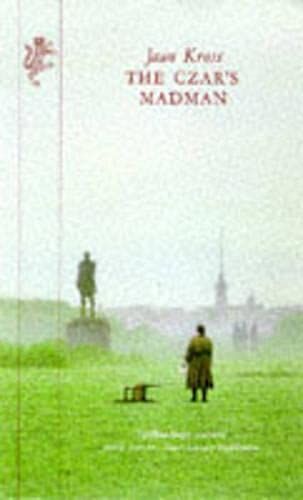
Jaan Kross, widely regarded as Estonia's foremost novelist, based The Czar's Madman on the life of a real historical figure. Timo von Bock was a Baltic German baron in the early nineteenth century who dared to address Tsar Alexander I with frank criticism of the imperial order. For this act he was locked away for nine years. The novel begins after his release, when he returns to his estate in Livonia, a historical region spanning parts of present-day Estonia and Latvia.
Freedom, however, is only nominal. Timo is confined to his property and watched constantly by police informers placed inside his own household. His daily life becomes a succession of small humiliations designed to remind him that the state's grip has not loosened. The story is set against the broader tensions of post-Napoleonic Russia, where questions of loyalty, reform, and imperial authority shaped the lives of landowners and serfs alike.
The narrative draws on the overlap between personal defiance and political control. Kross, who himself lived through Soviet-era Estonia, chose a nineteenth-century setting to explore how a government can punish dissent long after the prison door opens. The novel's Livonian landscape grounds these tensions in a specific, layered corner of the Baltic world.