The Gulag Archipelago
SynopsisPlot
Drawing on his own experiences before, during and after his eleven years of incarceration and exile, on evidence provided by more than 200 fellow prisoners, and on Soviet archives, Solzhenitsyn reveals with torrential narrative and dramatic power the entire apparatus of Soviet repression, the state within the state that once ruled all-powerfully with its creation by Lenin in 1918. Through truly Shakespearean portraits of its victims-this man, that woman, that child-we encounter the secret police operations, the labor camps and prisons, the uprooting or extermination of whole populations, the “welcome” that awaited Russian soldiers who had been German prisoners of war. Yet we also witness astounding moral courage, the incorruptibility with which the occasional individual or a few scattered groups, all defenseless, endured brutality and degradation. And Solzhenitsyn’s genius has transmuted this grisly indictment into a literary miracle.
Story
About this book
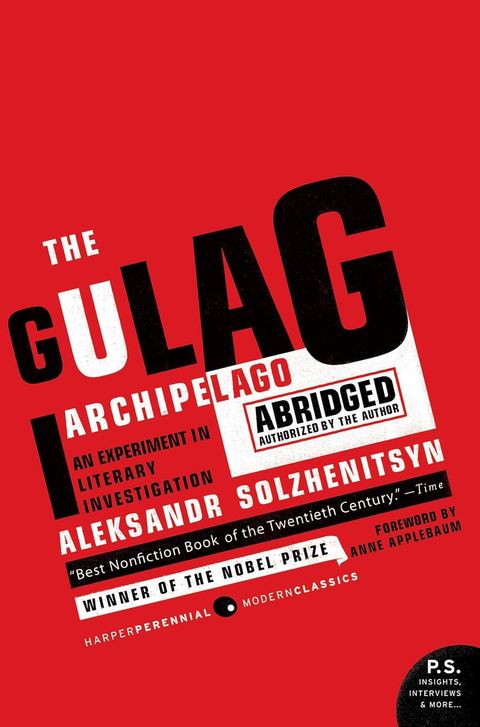
The Gulag Archipelago is Aleksandr Solzhenitsyn's account of the Soviet forced-labor camp system, assembled from his own eleven years of imprisonment and exile and from the testimonies of over two hundred other survivors. The book traces the origins of Soviet state repression from 1918 onward, documenting secret police operations, interrogation methods, transit networks, prison camps, and the forced displacement or destruction of entire populations. Solzhenitsyn also records the fates of returning Soviet soldiers who had been held as prisoners of war by Germany, only to face suspicion and punishment at home.
This edition condenses the original work into a single abridged volume, prepared with the author's direct involvement. Solzhenitsyn organized the material around specific people and situations rather than presenting a purely statistical survey. Individual portraits of men, women, and children appear throughout, grounding the broader institutional record in particular lives. Alongside accounts of systematic cruelty, the book describes instances of resistance and moral endurance among people who had no institutional protection.
Solzhenitsyn was awarded the Nobel Prize in Literature. The Gulag Archipelago draws on both personal memory and Soviet archival sources, combining documented evidence with sustained narrative across a wide span of decades, from the early years of Soviet rule through the period that followed the Second World War.