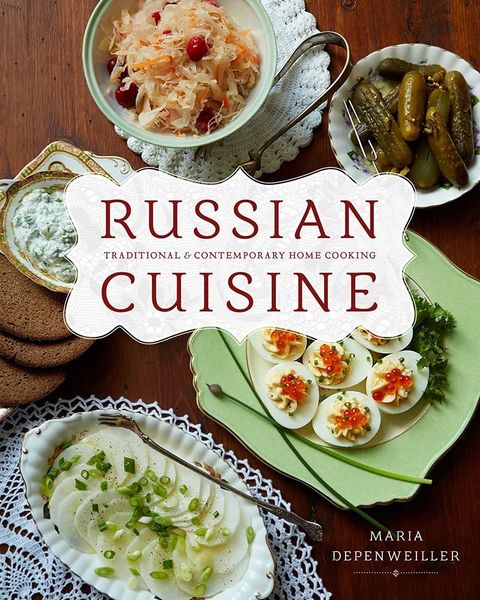
Russian Cuisine: Traditional and Contemporary Home Cooking
SynopsisPlot
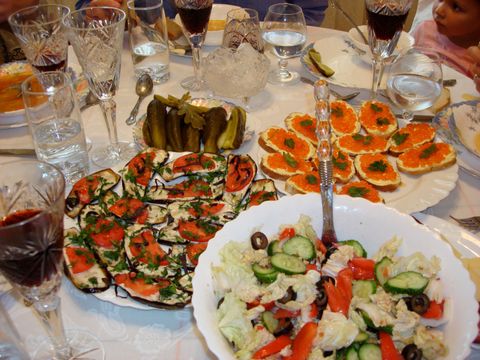
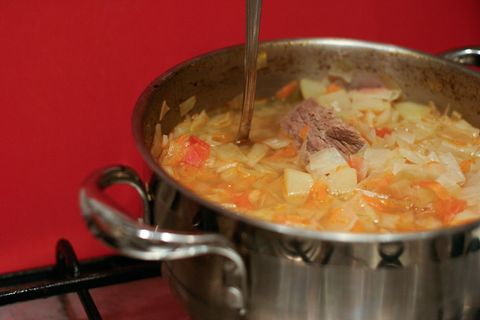
Detailing the evolution and development of traditional Russian cooking, this book gives a better understanding of the foods that are now known as classical Russian dishes. Through the words of native Muscovite, Maria Depenweiller, who was born and raised in Moscow before immigrating to Canada, Russian Cuisine: Traditional and Contemporary Home Cooking covers not only Russian cooking methods such as the Russian oven samovar, but also the impact of Russian politics on its food. Discover how: The Soviet Revolution impacted Russian eating habits. Or how the Russian tea drinking tradition got started. Learn about the home cooking of the Russian Empire and try schi and rasstegai. Delight your guests with marvelous assortment of zakuski or ant hill torte from the classical Soviet cuisine. Complete the experience with suggested reading from the literature Russian classics and music accompaniment to match the mood. From table settings, to backyard gardens and pantry items, this book teaches you everything you need to know about Russian food.
Story
About this book
Russian Cuisine: Traditional and Contemporary Home Cooking is a cookbook and cultural guide written by Maria Depenweiller, a native Muscovite who grew up in Moscow before moving to Canada. The book traces how Russian cooking developed over centuries, explaining how dishes now considered classics came to be part of the national table. It covers practical topics such as traditional cooking methods, including the Russian oven and the samovar, a metal container used to heat water for tea.
Beyond recipes, the book places Russian food in its political and social context. It describes how the Soviet Revolution changed everyday eating habits and how tea drinking became a widespread tradition across the country. Readers will find dishes from different eras, including schi, a cabbage soup with roots in peasant kitchens, and rasstegai, an open-topped pastry filled with fish or meat. Soviet-era favorites such as ant hill torte also appear alongside zakuski, the assortment of small dishes served before a main meal.
The book includes guidance on table settings, backyard gardening, and pantry staples. It also pairs chapters with suggestions for Russian literature and music, connecting the food to broader cultural life across a country that stretches through eleven time zones and encompasses over 180 ethnic groups.