Dead Souls
SynopsisPlot
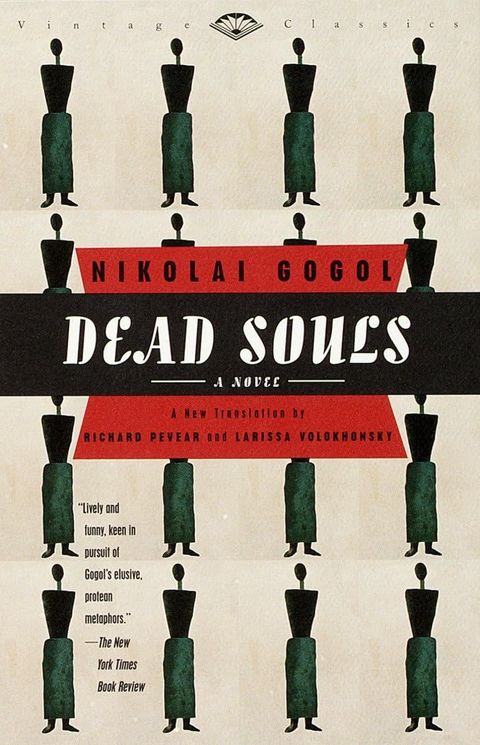
As Gogol's wily antihero, Chichikov, combs the back country wheeling and dealing for "dead souls"--deceased serfs who still represent money to anyone sharp enough to trade in them--we are introduced to a Dickensian cast of peasants, landowners, and conniving petty officials, few of whom can resist the seductive illogic of Chichikov's proposition. This lively, idiomatic English version by the award-winning translators Richard Pevear and Larissa Volokhonsky makes accessible the full extent of the novel's lyricism, sulphurous humor, and delight in human oddity and error.
Story
About this book
Dead Souls follows Pavel Chichikov, a smooth-talking schemer who travels through the Russian provinces with an unusual business plan. He calls on local landowners to buy dead souls, meaning serfs who have died since the last census but still appear on official registers as living property. Because owners pay tax on every registered name, Chichikov offers to take those names off their hands.
Nikolai Gogol published the first part of the novel in 1842. Through Chichikov's visits to one estate after another, the book introduces a cast of provincial figures: sentimental dreamers, stubborn widows, reckless gamblers, misers living in squalor, and layers of local officials. Few can resist the odd logic of his offer, and each meeting shows another texture of rural self-interest in nineteenth-century Russia.
Much of the action unfolds on country roads and in the guest rooms of small towns, where reputation travels faster than fact. This edition uses a translation by Richard Pevear and Larissa Volokhonsky. Gogol planned the book as the first part of a larger work, but the continuation was never finished in a form he accepted before his death in 1852.