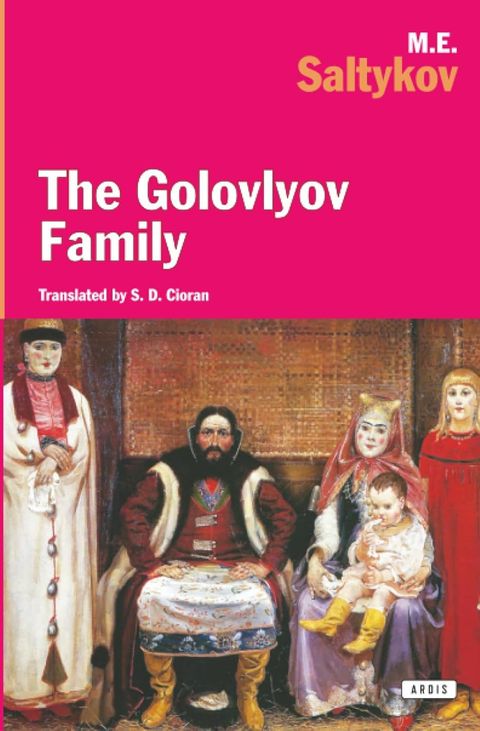
The Golovlyov Family
SynopsisPlot
In this scathing portrait of 19th-century Russian aristocracy, Mikhail Saltykov-Shchedrin chronicles the slow, suffocating collapse of the Golovlyov family. At the center is Arina Petrovna, a domineering matriarch who rules her estate with iron will and emotional austerity. Her children—weak, vain, and spiritually hollow—drift into ruin, none more hauntingly than Porfiry Vladimirovich, known as “Little Judas,” whose pious hypocrisy masks a soul steeped in cruelty and self-delusion. Written with biting satire and psychological depth, The Golovlyov Family is widely regarded as Saltykov-Shchedrin’s magnum opus and one of the darkest works in Russian literature. It is a novel of generational rot, where love is absent, faith is performative, and the family estate becomes a mausoleum of the living dead.
Story
About this book
The Golovlyov Family follows the decline of a landowning Russian household across several generations. At the head of the family stands Arina Petrovna, a controlling matriarch who manages the estate with rigid authority and little warmth. Her children, raised in an atmosphere of emotional coldness, lack the capacity to sustain themselves or each other. One by one, they fall into dependence, drink, or despair. The novel tracks this disintegration with a steady, forensic attention to how each family member contributes to the collective collapse.
The most prominent figure among the children is Porfiry Vladimirovich, nicknamed Little Judas by those around him. Porfiry speaks constantly in the language of piety and family feeling, but his words serve only to manipulate and control. His religious talk functions as a tool of domination rather than genuine belief. Saltykov-Shchedrin, writing in the 1870s and 1880s, was known as one of the sharpest satirists of Russian public life, and this novel concentrates that satirical eye on the private sphere of the household.
The estate itself plays a central role, becoming less a home and more a place where inhabitants are trapped by inheritance, obligation, and habit. The story examines what happens when a family loses any real connection between its members while preserving all the outward forms of closeness.