The Unwomanly Face of War
SynopsisPlot
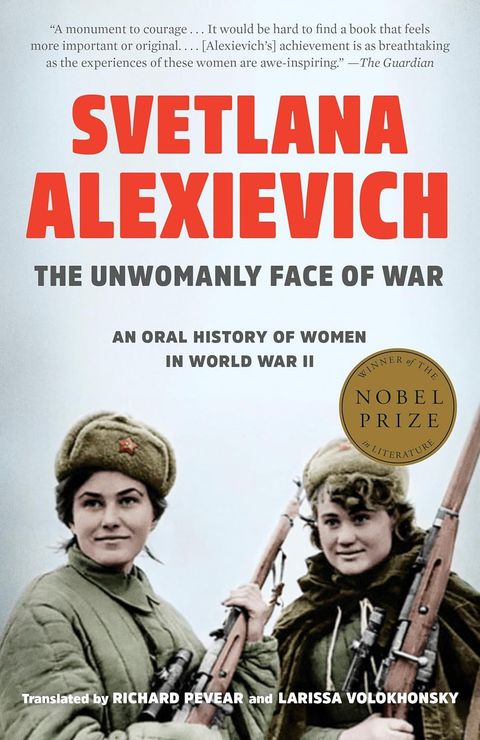
In The Unwomanly Face of War, Alexievich chronicles the experiences of the Soviet women who fought on the front lines, on the home front, and in the occupied territories. These women—more than a million in total—were nurses and doctors, pilots, tank drivers, machine-gunners, and snipers. They battled alongside men, and yet, after the victory, their efforts and sacrifices were forgotten. Alexievich traveled thousands of miles and visited more than a hundred towns to record these women’s stories. Together, this symphony of voices reveals a different aspect of the war—the everyday details of life in combat left out of the official histories.
Story
About this book
Svetlana Alexievich, a Belarusian writer awarded the Nobel Prize in Literature in 2015, spent years recording the spoken testimony of Soviet women who served in the Second World War. More than a million took part, working as nurses, doctors, pilots, tank drivers, snipers, and machine-gunners. They served at the front, behind it, and inside occupied territory, and after the victory their accounts were left out of official history.
To gather these voices, Alexievich traveled thousands of miles and visited more than a hundred towns. The book collects what the women remembered in their own speech, ordered as a chorus of separate accounts rather than a single narrator. Instead of strategy or politics, attention rests on the practical texture of daily life under fire, the small particulars that formal records usually omit.
The Russian original appeared under a title stating that war has no woman's face, and this English edition brought the work to readers who had waited long for a full translation. Alexievich has built other books the same way, interviewing many people and setting their recollections side by side so that one shared experience is described from dozens of positions.