The Power of Women: A Doctor's Journey of Hope and Healing
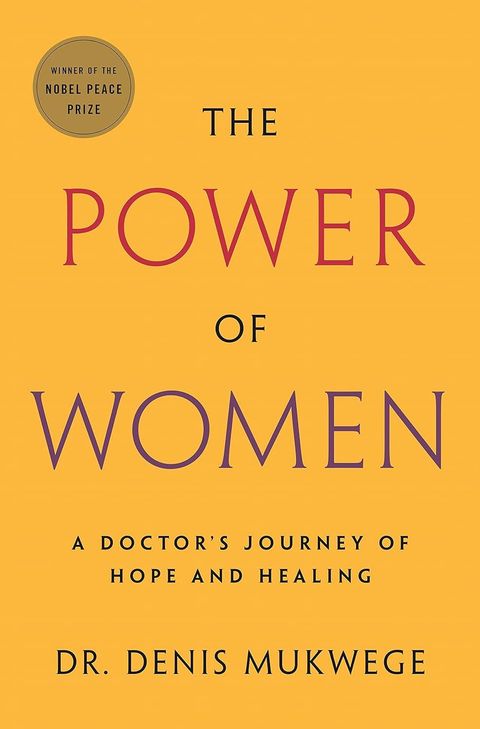
SynopsisPlot
Dr. Mukwege’s dramatic personal story is interwoven throughout as he explores the bigger issues that have become a focus of his advocacy. He will seek to explain why sexual violence is so often overlooked during war, and how governments need to recognize and compensate victims. He will also stress the importance of breaking down the taboos surrounding assault, and the necessity of building a system that supports women who come forward. His words advocate for saying ‘no’ to indifference and he asks readers to reckon with the West’s involvement in perpetuating sexual violence in places like the Democratic Republic of Congo, and to confront the abuse taking place in their own communities. Sexual violence does not occur in a vacuum. The conflict in the Democratic Republic of Congo, which has raged for over 20 years and has claimed an estimated 5 million lives, is inseparable from Western patriarchy and economic colonization. And this cycle of violence and spoils is not limited to Congo. Dr. Mukwege’s work has led him to South Korea, Latin America, the Middle East, and elsewhere in Africa, where he has found striking similarities in women’s testimonies.
Story
About this book
Denis Mukwege is a gynecological surgeon based in Bukavu, in the eastern Democratic Republic of the Congo. Over decades of medical practice, he has treated thousands of women and girls who survived sexual violence linked to armed conflict in the region. In this book, he combines his own life story with a broader examination of why wartime sexual violence receives so little international attention and what structural failures allow it to continue.
Mukwege traces connections between the long-running conflict in the DRC, which has caused an estimated five million deaths over more than twenty years, and patterns of economic exploitation rooted outside the country. He argues that sexual violence in conflict zones cannot be understood in isolation from global supply chains and political interests. His medical and advocacy work has also taken him to South Korea, Latin America, the Middle East, and other parts of Africa, where he has observed similar patterns in women's accounts of assault and its aftermath.
The book addresses the systems that discourage survivors from speaking and the legal and social structures that would need to change in order to support them. Mukwege discusses what recognition and compensation for victims could look like, and why indifference, both distant and local, sustains the problem. He was awarded the Nobel Peace Prize in 2018.