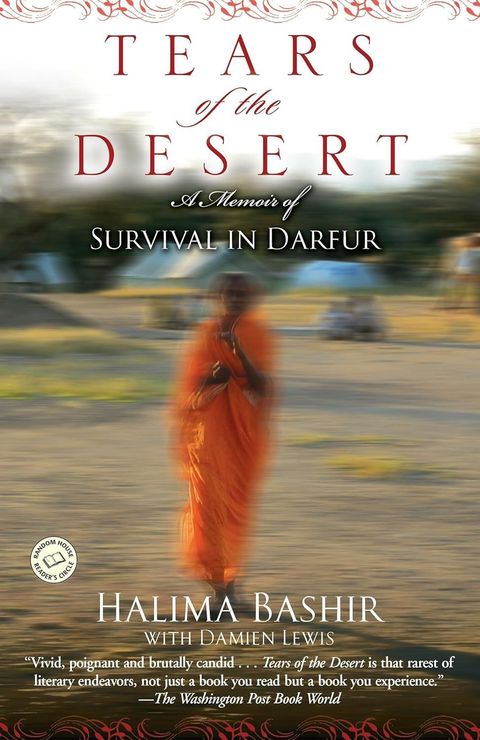
Tears of the Desert: A Memoir of Survival in Darfur
SynopsisPlot
Born into the Zaghawa tribe in the Sudanese desert, Halima Bashir received a good education away from her rural surroundings (thanks to her doting, politically astute father) and at twenty-four became her village’s first formal doctor. Yet not even Bashir’s degree could protect her from the encroaching conflict that would consume her homeland. Janjaweed Arab militias savagely assaulted the Zaghawa, often with the backing of the Sudanese military. Then, in early 2004, the Janjaweed attacked Bashir’s village and surrounding areas, raping forty-two schoolgirls and their teachers. Bashir, who treated the traumatized victims, some as young as eight years old, could no longer remain quiet. But breaking her silence ignited a horrifying turn of events.
Story
About this book
Halima Bashir grew up in western Sudan as a member of the Zaghawa tribe. Her father, a cattle herder, recognized the value of formal schooling and arranged for her to study far from their rural home. Bashir proved a strong student, eventually entering medical training. By the age of twenty-four she had returned to her village as its first qualified doctor.
The memoir traces how the conflict in Darfur overtook Bashir's life and community. Janjaweed Arab militias carried out violent attacks against the Zaghawa, frequently supported by the Sudanese military. In early 2004, fighters assaulted Bashir's village and the surrounding area, raping forty-two schoolgirls and their teachers. Bashir treated the survivors, some as young as eight. Faced with what she had witnessed, she chose to speak openly about the attacks. That decision brought severe consequences for her personally.
The book is described as the first memoir by a woman caught up in the Darfur war. Bashir recounts her childhood, her grandmother's influence, the racial discrimination she encountered during her education, and the steady escalation of violence that transformed the region. Her account moves from a close family portrait in the Sudanese desert to the broader reality of a humanitarian crisis.