Notes from the Hyena's Belly
SynopsisPlot
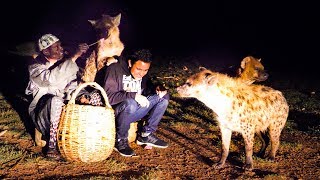
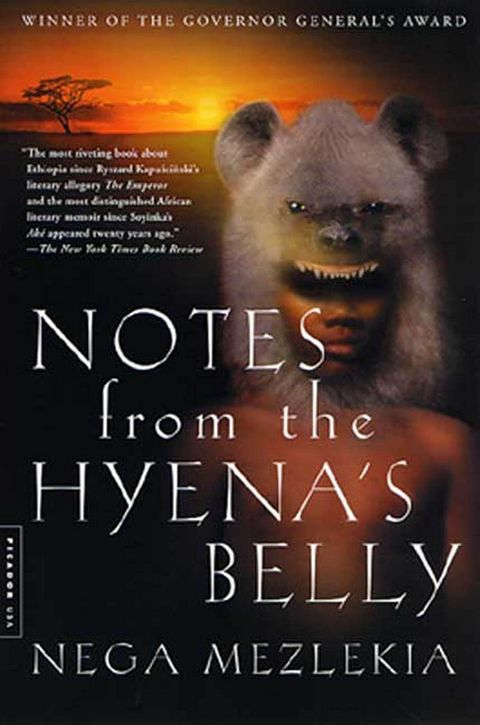
"We children lived like the donkey," Mezlekia remembers, "careful not to wander off the beaten trail and end up in the hyena's belly." His memoir sheds light not only on the violence and disorder that beset his native country, but on the rich spiritual and cultural life of Ethiopia itself. Throughout, he portrays the careful divisions in dress, language, and culture between the Muslims and Christians of the Ethiopian landscape. Mezlekia also explores the struggle between western European interests and communist influences that caused the collapse of Ethiopia's social and political structure―and that forced him, at age 18, to join a guerrilla army. Through droughts, floods, imprisonment, and killing sprees at the hands of military juntas, Mezlekia survived, eventually emigrating to Canada. In Notes from the Hyena's Belly he bears witness to a time and place that few Westerners have understood.
Story
About this book
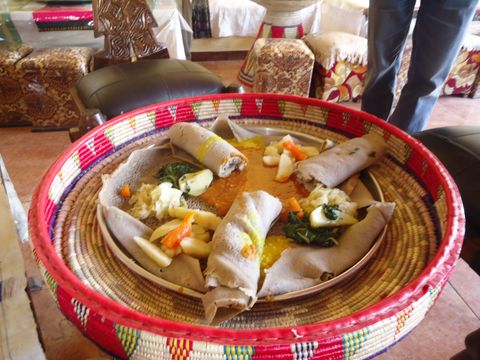
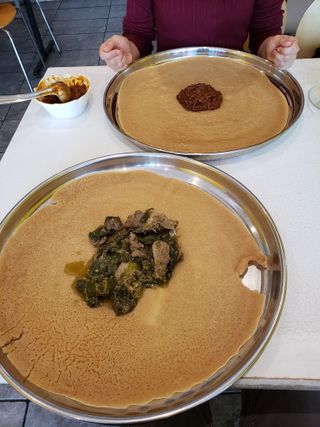
Nega Mezlekia grew up in the arid city of Jijiga, in eastern Ethiopia, during the 1970s and 1980s. His memoir opens with childhood in a place where Muslim and Christian communities lived side by side, divided by distinct customs in dress, language, and daily practice. The title draws on a proverb he recalls from youth: children, like donkeys, had to stay on the known path or risk ending up in the hyena's belly. Around him moved a cast of local figures, among them a schoolteacher under constant pressure, a school director who moonlighted as a poacher, and a priest said to know the languages of both heaven and hell.
As Mezlekia grew older, Ethiopia's political order collapsed under competing pressures from western European interests and communist-aligned forces. Civil war, famine, and military juntas reshaped daily life. At eighteen, he joined a guerrilla army. The memoir traces his path through drought, imprisonment, and armed conflict before he eventually left the country and settled in Canada.
The book works as both personal story and social history of the Horn of Africa during one of its most unstable periods. Mezlekia populates his account with specific people and places rather than broad generalizations, grounding large-scale upheaval in the details of one city and one family.