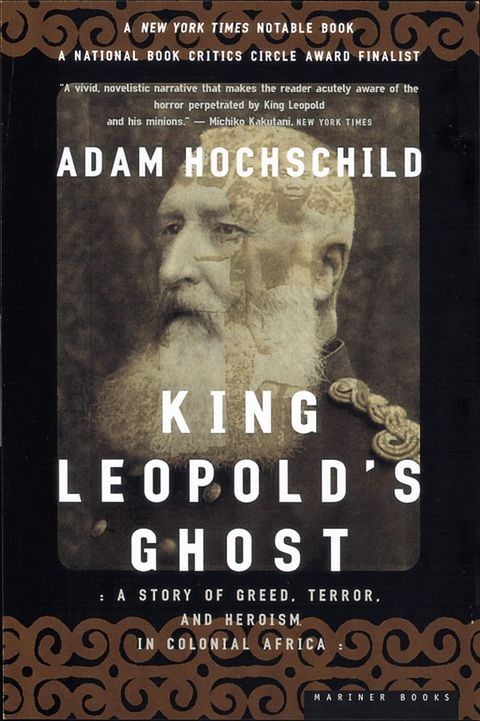
King Leopold's Ghost
SynopsisPlot
In the 1880s, as the European powers were carving up Africa, King Leopold II of Belgium seized for himself the vast and mostly unexplored territory surrounding the Congo River. Carrying out a genocidal plundering of the Congo, he looted its rubber, brutalized its people, and ultimately slashed its population by ten million—all the while shrewdly cultivating his reputation as a great humanitarian. Heroic efforts to expose these crimes eventually led to the first great human rights movement of the twentieth century, in which everyone from Mark Twain to the Archbishop of Canterbury participated. It is also the deeply moving portrait of those who fought Leopold: a brave handful of missionaries, travelers, and young idealists who went to Africa for work or adventure and unexpectedly found themselves witnesses to a holocaust.
Story
About this book
During the 1880s, European governments divided much of Africa among themselves. King Leopold II of Belgium claimed a huge territory around the Congo River, not as a Belgian colony but as his personal domain. Adam Hochschild's book traces how Leopold organized the extraction of rubber from this region through forced labor and systematic violence, reducing the population by an estimated ten million people. Leopold meanwhile maintained a public image as a philanthropist.
Hochschild follows the individuals who uncovered what was happening in the Congo. Missionaries, journalists, travelers, and activists, many of whom had arrived in Central Africa for unrelated reasons, became witnesses to widespread brutality and began reporting it to audiences in Europe and North America. Figures such as Mark Twain and the Archbishop of Canterbury eventually joined a growing campaign against Leopold's rule. The book presents this campaign as one of the earliest organized international human rights efforts of the twentieth century.
The narrative moves between Brussels, London, and the Congo basin, drawing on letters, official reports, and personal accounts. Hochschild also notes how the territory passed to Belgian state control in 1908, and how many records from Leopold's private administration were destroyed before that transfer took place.