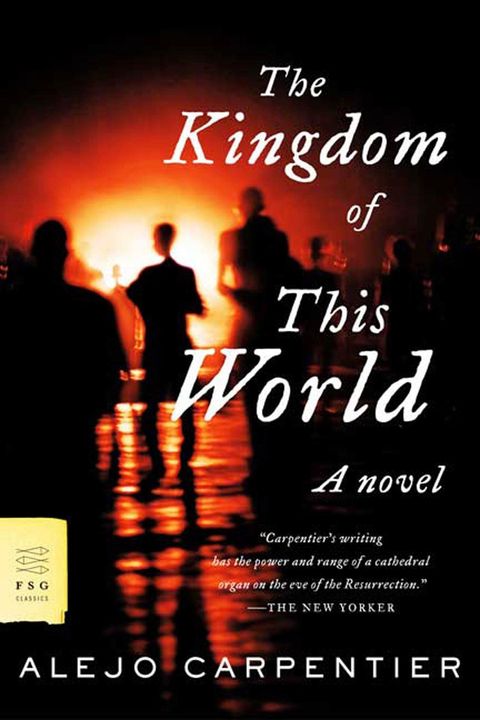
The Kingdom of This World
SynopsisPlot
A few years after its liberation from the brutality of French colonial rule in 1803, Haiti endured a period of even greater brutality under the reign of King Henri-Christophe, who was born a slave in Grenada but rose to become the first black king in the Western Hemisphere. In prose of often dreamlike coloration and intensity, Alejo Carpentier records the destruction of the black regime―built on the same corruption and contempt for human life that brought down the French while embodying the same hollow grandeur of false elegance, attained only through slave labor―in an orgy of voodoo, race hatred, madness, and erotomania.
Story
About this book
Alejo Carpentier's novel follows the upheavals of Haiti from the final years of French colonial rule through the rise of Henri-Christophe, a formerly enslaved man born in Grenada who became the first Black king in the Western Hemisphere. The story is told largely through the experiences of Ti Noel, an enslaved man whose life spans decades of political violence and transformation on the island. Carpentier, a Cuban writer with deep ties to Caribbean history, published the book in 1949 after visiting Haiti and touring the ruins of Christophe's mountaintop fortress.
The novel traces how the new Haitian regime reproduced many of the same abuses it had overthrown. Christophe's kingdom relied on forced labor to construct grand palaces and a massive citadel, imitating European aristocratic culture while crushing the population beneath it. Carpentier frames these events through a prose style shaped by what he called lo real maravilloso, or the marvelous real, a concept he outlined in the book's prologue. In this approach, the extraordinary elements of Caribbean life and belief, including vodou practice and oral tradition, are presented as ordinary parts of lived experience rather than as fantasy or spectacle.