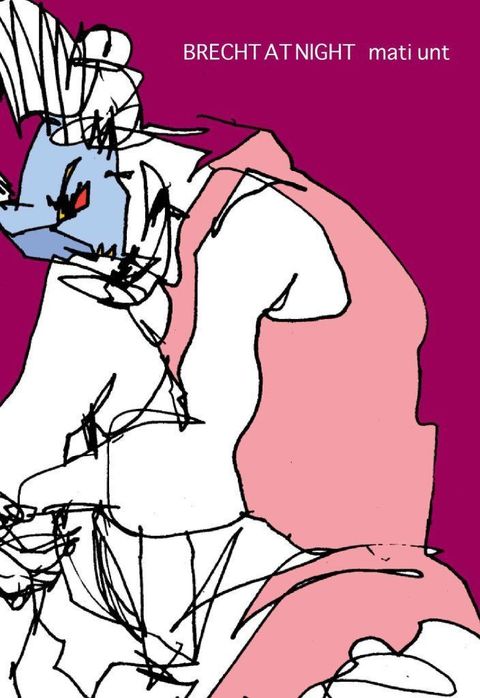
Brecht at Night
SynopsisPlot
This "documentary novel," the latest of Estonian author Mati Unt's deadpan and playful works to be translated into English, is about a little-known period in the life of the great Bertolt Brecht, when the writer--having fled Nazi Germany-- became stuck in Finland awaiting the visa that would allow him to leave Europe for the United States. As BB, the avowed communist, continues enjoying the bourgeois pleasures of pre-war life with his wife and tubercular mistress, the Soviet Union is not-so-quietly annexing Latvia, Lithuania, and Estonia; and the gulf between Brecht's preferred lifestyle and his inflammatory polemics grows larger and larger. Both affectionate and irreverent, this portrait of one of the twentieth century's great authors mixes together a variety of comic styles, excerpts from contemporaneous documents, and Unt's trademark digressions, producing a kind of historical novel as interested in interrogating the past as simply recreating it.
Story
About this book
In 1940, Bertolt Brecht found himself stranded in Finland. Having left Nazi Germany, the playwright was waiting for a visa that would let him cross to the United States. During this period he lived with his wife and his mistress, who suffered from tuberculosis, enjoying a comfortable existence that sat uneasily beside his public stance as a committed communist. Mati Unt, the Estonian novelist, uses this interlude as the foundation for a book he called a documentary novel.
While Brecht waits in Finland, the Soviet Union is steadily absorbing the three Baltic states of Latvia, Lithuania, and Estonia. Unt threads this political reality through the story, placing the gap between Brecht's private comforts and his radical writings at the center of the book. The tone moves between affection and irreverence, mixing comic styles, excerpts from historical documents, and frequent digressions that are characteristic of Unt's broader body of work.
The novel treats history as something to be questioned rather than simply reconstructed. Unt was one of Estonia's most recognized literary figures, and this book was translated into English as part of a wider effort to bring his writing to new audiences. Its subject is narrow in time but wide in what it asks about artists, politics, and self-contradiction.