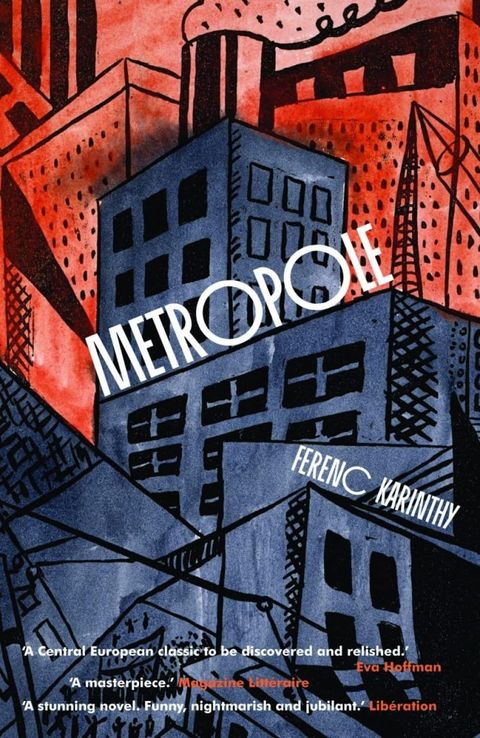
Metropole
SynopsisPlot
Budai finds himself in a strange city where he can’t understand a word anyone says. One claustrophobic day blurs into another as he desperately struggles to survive in this vastly overpopulated metropolis where there are as many languages as there are people.
Story
About this book
Budai, a linguist heading to a professional conference in Helsinki, somehow ends up in an unknown city. Nothing about the place is familiar. The signs, announcements, and conversations around him are in languages he cannot identify, and no one he meets can understand him either. The city is enormously crowded, its streets and buildings packed with people speaking what seems like an endless variety of tongues. Budai has no way to ask for help, buy food reliably, or find out where he is.
Each day in the city repeats the same desperate pattern. Budai tries to communicate, fails, and retreats to his hotel, where his only point of human contact is the woman who operates the elevator. Their connection develops without a shared language, built on gestures and proximity. Meanwhile, he worries that his wife back home believes he is dead. The metropolis itself feels sealed off, offering no visible exit and no clue about its location on a map.
Ferenc Karinthy, a Hungarian novelist and the son of the well-known satirist Frigyes Karinthy, wrote Metropole as a novel about isolation pressed into the shape of a city. The book strips away every tool its protagonist relies on as a linguist and places him in a setting where expertise in language counts for nothing.