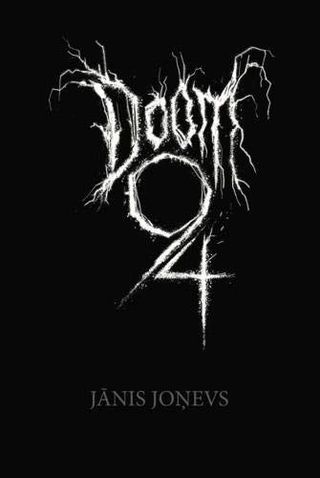
Doom 94
SynopsisPlot
Caught in cultural chaos, a then-teenage generation turns to the alternative lifestyle offered by an emergent heavy metal scene. Posing the questions of just how long rebellion can last, Doom 94 explores societal change, growing up, and looking back.
Story
About this book
Doom 94 is set in Latvia during the early 1990s, a period when the country regained its independence for the second time. Against this backdrop of political and cultural upheaval, the novel follows a teenage generation searching for identity in a society that is itself being remade. The heavy metal scene becomes a point of gravity for young people drawn to its noise, codes, and sense of belonging.
Janis Jonevs explores what it means to adopt an alternative lifestyle when everything around you is already in flux. The characters find in metal music a structure and community that the wider world cannot yet offer them. Rebellion, in this context, is both personal and generational, shaped by the specific conditions of a small Baltic country moving from Soviet rule into uncertain independence.
The novel also considers the distance between youth and adulthood, between the intensity of a subculture lived at close range and the cooler perspective that comes with time. It asks how long the spirit of rebellion can sustain itself once the circumstances that fed it begin to change. Latvia's own transformation during these years provides the novel with a concrete and particular setting rather than a generic one.