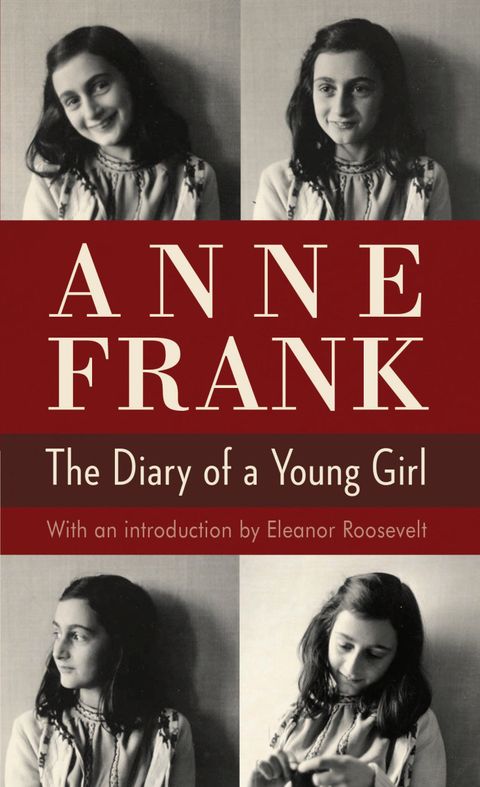
Anne Frank: The Diary of a Young Girl
SynopsisPlot
In 1942, with the Nazis occupying Holland, a thirteen-year-old Jewish girl and her family fled their home in Amsterdam and went into hiding. For the next two years, until their whereabouts were betrayed to the Gestapo, the Franks and another family lived cloistered in the “Secret Annexe” of an old office building. Cut off from the outside world, they faced hunger, boredom, the constant cruelties of living in confined quarters, and the ever-present threat of discovery and death. In her diary, Anne Frank recorded vivid impressions of her experiences during this period.
Story
About this book
In 1942, thirteen-year-old Anne Frank and her family left their home in Amsterdam to hide from the Nazi occupation of the Netherlands. Together with another family, they moved into concealed rooms above an office building, a space Anne called the Secret Annexe. For roughly two years, the group lived in these confined quarters, relying on trusted helpers to bring them food and news from outside.
Anne kept a diary throughout the period of hiding. She wrote about the daily tensions of sharing small rooms with several people, the boredom and fear that came with isolation, and her own thoughts on growing up under extraordinary pressure. Her entries move between ordinary adolescent concerns and sharp observations about the adults around her, the war beyond the walls, and her own changing sense of who she was becoming.
The diary was found in the annexe after the hiding place was betrayed and the occupants were arrested by the Gestapo. Anne's father, Otto Frank, was the only member of the family to survive the war. He arranged for the diary to be published, and it has since been translated into dozens of languages. The building at Prinsengracht 263 in Amsterdam, where the family hid, is now a museum.