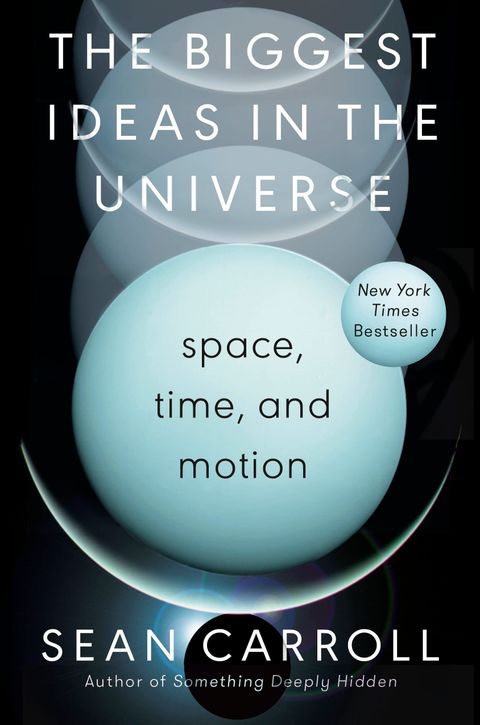
The Biggest Ideas in the Universe: Space, Time, and Motion
SynopsisPlot
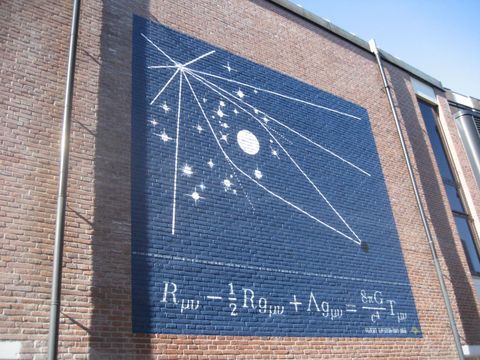
The most trusted explainer of the most mind-boggling concepts pulls back the veil of mystery that has too long cloaked the most valuable building blocks of modern science. Sean Carroll, with his genius for making complex notions entertaining, presents in his uniquely lucid voice the fundamental ideas informing the modern physics of reality. Physics offers deep insights into the workings of the universe but those insights come in the form of equations that often look like gobbledygook. Sean Carroll shows that they are really like meaningful poems that can help us fly over sierras to discover a miraculous multidimensional landscape alive with radiant giants, warped space-time, and bewilderingly powerful forces. High school calculus is itself a centuries-old marvel as worthy of our gaze as the Mona Lisa. And it may come as a surprise the extent to which all our most cutting-edge ideas about black holes are built on the math calculus enables.
Story
About this book
Sean Carroll is a theoretical physicist known for his work in cosmology and quantum mechanics. In The Biggest Ideas in the Universe: Space, Time, and Motion, he sets out to explain the actual equations behind modern physics to a general audience. Rather than skipping the math or hiding it behind analogies, Carroll walks through the formulas themselves, starting from high school calculus and building toward the concepts that shape our current understanding of space, time, gravity, and motion.
The book covers ground that ranges from classical mechanics through Einstein's general relativity, with attention to how each mathematical tool connects to physical reality. Carroll treats calculus not as an obstacle but as a language, one developed over centuries, that allows precise descriptions of how objects move, how gravity curves spacetime, and how black holes behave. Each chapter builds on the previous one, gradually introducing more advanced ideas while staying anchored in clear explanations of the notation and logic involved.
Carroll's approach is unusual among popular science books in that it does not avoid equations or treat them as decorative. The Wall Street Journal described the book as technically accurate while maintaining a light tone. It is the first volume in a planned series covering the central frameworks of modern physics.