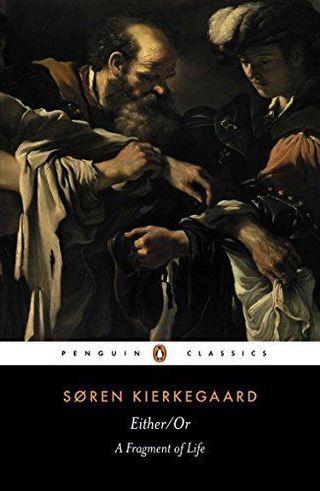
Either/Or: A Fragment of Life
SynopsisPlot
In Either/Or, using the voices of two characters—the aesthetic young man of part one, called simply "A," and the ethical Judge Vilhelm of the second section—Kierkegaard reflects upon the search for a meaningful existence, contemplating subjects as diverse as Mozart, drama, boredom, and, in the famous Seducer's Diary, the cynical seduction and ultimate rejection of a young, beautiful woman.
Story
About this book
Søren Kierkegaard published Either/Or in 1843 in Copenhagen, presenting it as a collection of papers supposedly found by a fictional editor named Victor Eremita. The book is split into two contrasting sections, each written in the voice of a different character. The first belongs to an unnamed young man referred to only as A, who writes on music, drama, boredom, and pleasure. His essays include a lengthy analysis of Mozart's Don Giovanni and the well-known Seducer's Diary, which traces the calculated courtship and cold abandonment of a young woman.
The second section belongs to Judge Vilhelm, an older married man who writes long letters addressed to A. Where A treats life as a series of sensory and intellectual experiences to be savoured or discarded, the Judge argues for commitment, duty, and the ethical shape a life gains through sustained choices. The two voices never resolve into a single answer. Kierkegaard leaves the tension between them open, offering no final editorial verdict.
The structure itself carries the argument. By placing an aesthetic outlook and an ethical one side by side without declaring a winner, Kierkegaard turns the reader's own response into part of the philosophical exercise. The book was his first major work and remains central to existentialist thought.