The Tiger Queens
SynopsisPlot
In the late twelfth century, across the sweeping Mongolian grasslands, brilliant, charismatic Temujin ascends to power, declaring himself the Great, or Genghis, Khan. But it is the women who stand beside him who ensure his triumph.... After her mother foretells an ominous future for her, gifted Borte becomes an outsider within her clan. When she seeks comfort in the arms of aristocratic traveler Jamuka, she discovers he is the blood brother of Temujin, the man who agreed to marry her and then abandoned her long before they could wed. Temujin will return and make Borte his queen, yet it will take many women to safeguard his fragile new kingdom. Their daughter, the fierce Alaqai, will ride and shoot an arrow as well as any man. Fatima, an elegant Persian captive, will transform her desire for revenge into an unbreakable loyalty. And Sorkhokhtani, a demure widow, will position her sons to inherit the empire when it begins to fracture from within.
Story
About this book
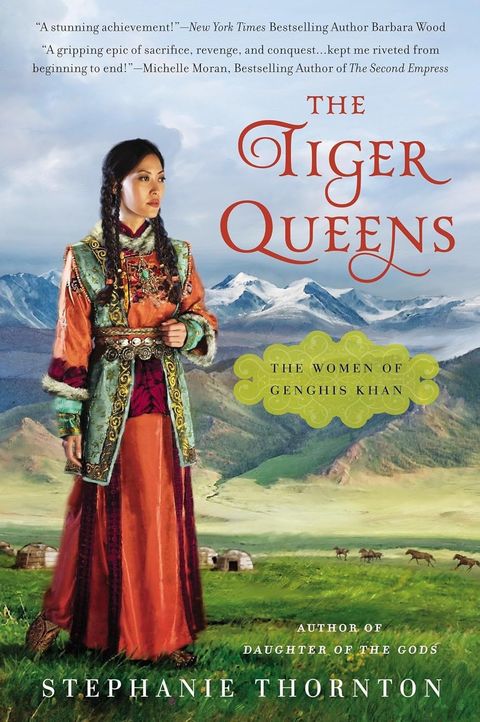
The Tiger Queens by Stephanie Thornton is a historical novel set on the Mongolian steppe in the late twelfth century, as the warrior Temujin rises to become Genghis Khan. The story keeps its focus on the women around him rather than on the conqueror, beginning with Borte, who was promised to Temujin in childhood only to be left waiting for years. When he returns and makes her his queen, she becomes one of several women whose resolve helps hold a growing and unstable empire together.
The novel follows four central figures across different stages of Mongol expansion. Borte navigates her position as principal wife and political partner. Alaqai, her daughter with Temujin, grows up skilled in riding and archery. Fatima, a Persian woman taken captive, gradually redirects her anger into fierce allegiance. Sorkhokhtani, widowed young, works to secure the place of her sons in the line of succession as the empire starts to divide from within.
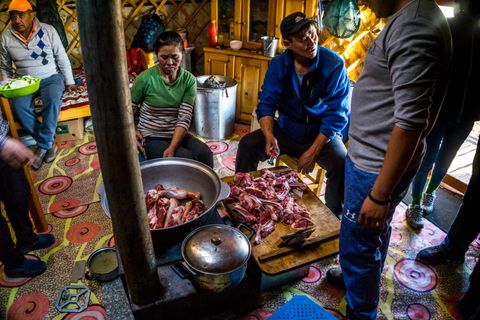
Thornton uses these overlapping perspectives to trace how the Mongol Empire was shaped by personal alliances, family tensions, and the strategic calculations of women whose names rarely appear in standard accounts of the period. The setting stays close to the grasslands and travelling felt-walled camps of the Mongol clans.