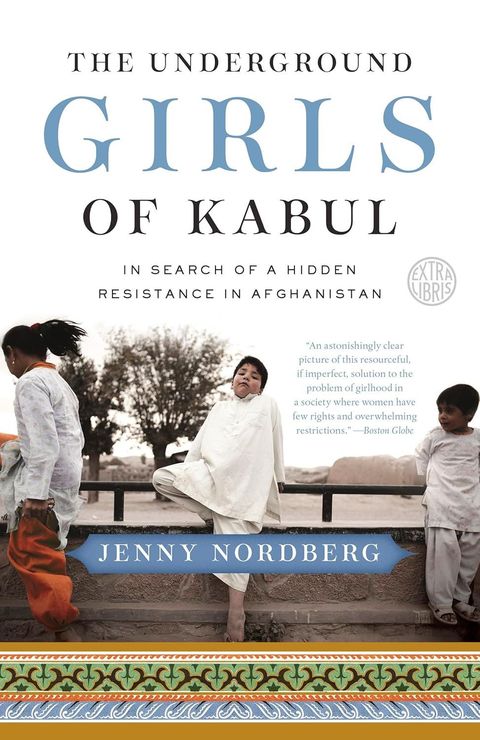
The Underground Girls of Kabul
SynopsisPlot
A bacha posh (literally translated from Dari as “dressed up like a boy”) is a third kind of child—a girl temporarily raised as a boy and presented as such to the outside world. Jenny Nordberg, the reporter who broke the story of this phenomenon for the New York Times, constructs a powerful and moving account of those secretly living on the other side of a deeply segregated society where women have almost no rights and little freedom. The Underground Girls of Kabul is anchored by vivid characters who bring this remarkable story to life: Azita, a female parliamentarian who sees no other choice but to turn her fourth daughter Mehran into a boy; Zahra, the tomboy teenager who struggles with puberty and refuses her parents’ attempts to turn her back into a girl; Shukria, now a married mother of three after living for twenty years as a man; and Nader, who prays with Shahed, the undercover female police officer, as they both remain in male disguise as adults.
Story
About this book
In parts of Afghanistan, some families respond to the pressure of having no sons by raising a daughter as a boy. The practice, known as bacha posh, a Dari phrase meaning dressed up like a boy, allows a child to move freely in public, attend school, and work outside the home in ways that girls otherwise cannot. Jenny Nordberg, a journalist who first reported on the custom for the New York Times, follows several individuals and families navigating this arrangement across different stages of life.
The book introduces Azita, a member of parliament who presents her fourth daughter Mehran as a son to the outside world. Zahra, a teenager living as a boy, resists her family's efforts to reverse the change as puberty arrives. Shukria spent twenty years as a man before marrying and raising children as a woman. Nader and Shahed, a disguised female police officer, continue living as men into adulthood, each facing a different set of consequences. Nordberg uses these individual accounts to examine what the practice reveals about gender, opportunity, and survival in a society where women hold very few legal or social rights.