The Knot in the Rug
SynopsisPlot
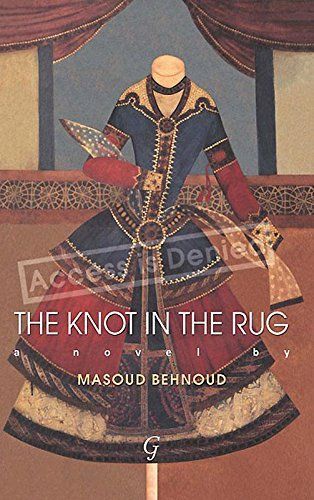
The book’s heroine, Khanoum, is in the courts of Persia’s Qajar dynasty. The twists and turns in Khanoum’s life make for a gripping read, whilst at the same time shedding light on traditional Persian customs of birth, marriage, and death, still followed in modern-day Iran. Forced to flee Persia during the Constitutional Revolution of 1906, Khanoum is brought up by her uncle and his immediate family. Her teenage years are marked by her struggles: family tragedy, her horrendous journey through Persia, and her uncertain future. Once in Russia her aunt, a woman of great strength and wisdom, manages to bring some sense of order to their exiled gathering by creating a home akin to what they were accustomed to. However, some years later, the Bolshevik revolution brings another upheaval and they flee once more; this time to Istanbul.
Story
About this book
The Knot in the Rug follows a woman known as Khanoum through the final years of Persia's Qajar dynasty and the upheavals that followed. Forced to leave Persia during the Constitutional Revolution of 1906, she is raised by her uncle's family in exile. Her teenage years bring family loss, a difficult overland crossing through Persia, and constant uncertainty about what comes next. Masoud Behnoud uses her story to open a window onto Persian customs surrounding birth, marriage, and death, many of which persist in present-day Iran.
Once in Russia, Khanoum's aunt takes charge of the displaced household, rebuilding routines and a sense of home modeled on the life they left behind. That stability does not last. The Bolshevik revolution uproots the family again, sending them onward to Istanbul. Each move strips away more of the familiar world Khanoum knew, while the social codes she carries with her prove more durable than any single address.
The novel traces how ordinary domestic life continues under political pressure, and how exile reshapes family roles. Behnoud grounds the narrative in specific historical events, connecting personal fate to the wider collapse and reformation of power across early twentieth-century Persia, Russia, and the Ottoman capital.